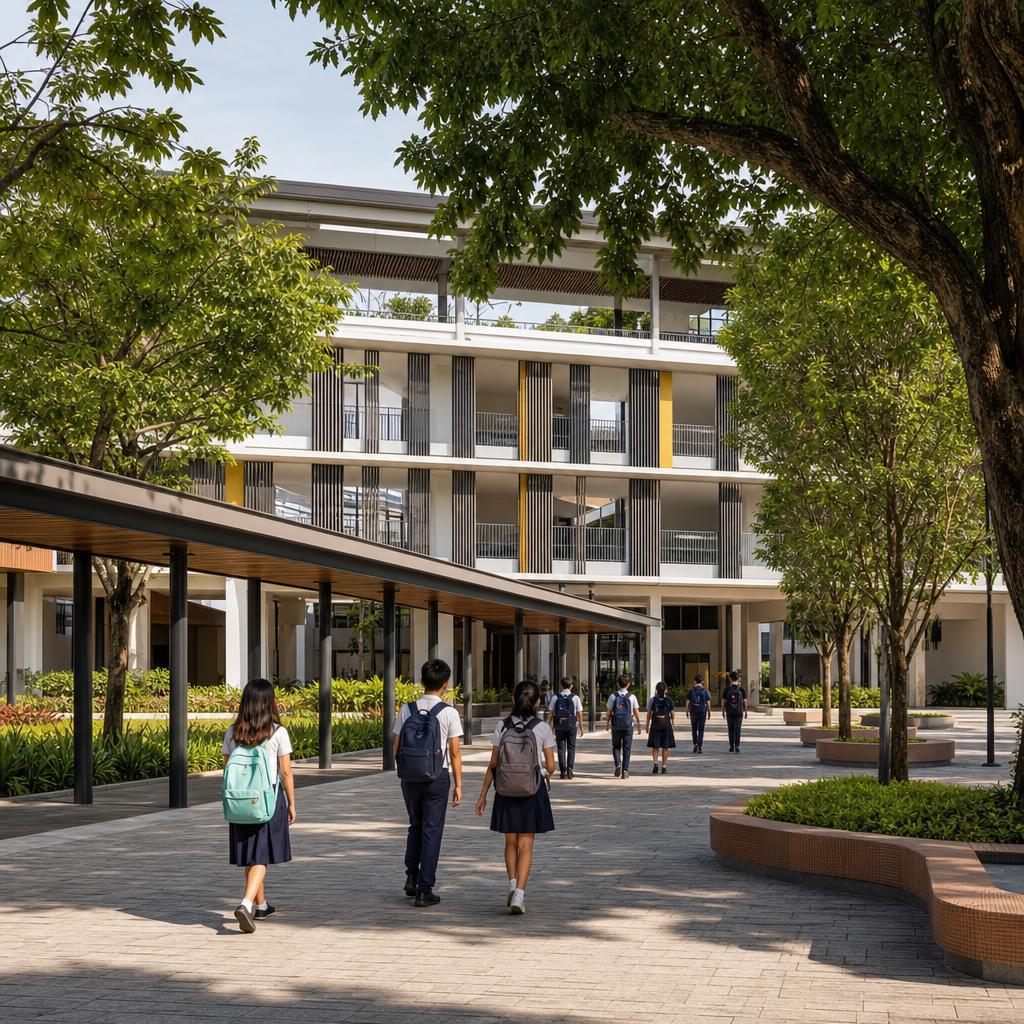
Choosing a school is one of the biggest decisions parents make after moving to a new country. In Singapore, the range of local and international options can make that decision feel especially overwhelming.
Families may encounter the Singapore national curriculum, International Baccalaureate, British, American, Australian, Canadian, Indian and other country-specific pathways. Schools can also differ in culture, class size, teaching style, extracurricular opportunities, university preparation and learning support.
The most useful question is not, “Which is the best school in Singapore?” It is, “Which school and curriculum are the best fit for my child and our family’s future plans?”
Start here: the five-part shortlist
- Your child: learning style, wellbeing, interests and support needs
- Your future: how long you expect to stay and where you may move next
- The pathway: curriculum, assessment and eventual qualifications
- Daily life: location, travel time, activities and family logistics
- The full cost: every compulsory and likely annual expense
Use these five filters before comparing individual school names. They will turn a long list into a more manageable shortlist.
1. Start with your child, not the school
Rankings, facilities, fees and parent recommendations can be useful, but your child is the most important starting point.
Ask yourself:
- Does my child prefer structure or exploration?
- Do they enjoy academic competition?
- Are they independent, or do they need more guidance?
- Which subjects and activities make them feel confident?
- How easily do they adapt to change?
- Do they need language, learning or developmental support?
- How important are sport, music, art or a strong social environment?
A school that works brilliantly for one child may not work equally well for another. School selection should be about fit, not only reputation.
2. Think about how long you may stay
Your expected time in Singapore can shape the right choice. If you may leave after two or three years, a portable curriculum that supports an easier transition to another country may matter most.
If you expect to stay for five or ten years—or potentially settle permanently—a Singapore-based education pathway may deserve closer consideration.
Ask one direct question: Are we building a long-term life in Singapore, or is Singapore one stop in our family’s international journey?
There is no wrong answer. But the answer affects which curriculum, language pathway and school environment may make sense.
3. Understand the curriculum before comparing schools
A curriculum is more than a label. It determines how children learn, how they are assessed, how subjects are selected and which qualifications they eventually receive.
Common pathways in Singapore include:
- Singapore national curriculum
- International Baccalaureate (IB)
- British or Cambridge
- American
- Australian or Canadian
- Indian or CBSE
- Other country-specific curricula
Do not choose one simply because it is described as “better.” Ask how much emphasis it places on examinations, how flexible subject choices are, how progress is measured and where its qualifications can take your child.
4. Consider your child’s next destination
For younger children, you may not know where they will attend university. It is still worth checking whether the chosen curriculum is portable if your family moves again.
For teenagers, the link between subjects, examinations and university entry becomes much more important. Ask each school:
- Where do graduates typically study?
- Which countries and types of universities are represented?
- How does university counselling work?
- When do students receive subject-selection guidance?
- Is support available for applications, testing and scholarships?
The school your child attends today can influence the options available later.
5. Match the priorities to your child’s age
For younger children
- Emotional wellbeing, play and exploration
- Teacher attention and social development
- Language development and transition support
- Outdoor activities
For primary-school children
- Mathematics, literacy and languages
- Homework and assessment expectations
- Learning support and extracurricular activities
For teenagers
- Subject choice and examination systems
- Academic rigour and university pathways
- Career preparation, leadership and enrichment
- University counselling
The best school for a six-year-old may not be the best school for a 16-year-old.
6. Understand the academic environment
When a school says it is academically strong, find out what that means in daily life. Academic excellence and academic pressure are not necessarily the same thing.
Ask about homework, assessment frequency, competition, individual attention and what happens when a student falls behind. Also ask whether extension opportunities exist for children who are ready to move ahead.
Some children thrive in highly competitive environments. Others perform better when they have room to explore, make mistakes and build confidence.
7. Look beyond examination results
A school should ideally give children opportunities to discover interests that may never appear on an academic transcript.
Look for the depth—not simply the existence—of opportunities in:
- Sport, music, performing arts and visual arts
- Coding, robotics, debate and entrepreneurship
- Community service and leadership
- Outdoor education, clubs and societies
Ask not only, “What grades will my child get?” but also, “What kind of person will my child have the opportunity to become?”
8. Prioritise social and emotional wellbeing
Moving countries can mean leaving friends, grandparents, teachers, familiar surroundings and a language or culture a child knows well. School can play a major role in helping them settle.
Ask about:
- New-student orientation and buddy programmes
- Counselling and pastoral care
- Anti-bullying policies
- Class sizes and teacher accessibility
- Parent-school communication
During a visit, observe whether students appear comfortable, teachers know their students and children seem to support one another. You may learn more from those interactions than from a brochure.
9. Plan for language and cultural transition
If your child previously studied in another language, understand the support available during the transition. Even fluent English speakers may need time to adjust to a different classroom culture.
Families considering local schools should understand Singapore’s bilingual education approach and the role of Mother Tongue Languages. For international schools, ask:
- Which languages are taught?
- Is English-language or other transition support available?
- Can my child continue learning their home language?
- How diverse is the student community?
Maintaining a connection with a child’s language and culture can be especially important for internationally mobile families.
10. Check class size and teacher interaction
A smaller class does not automatically mean a better education, but it can affect how much individual attention a child receives.
Ask for the average class size, student-to-teacher ratio, use of teaching assistants, teacher turnover and how accessible teachers are to parents.
11. Test the real school journey
Singapore is geographically compact, but commuting can still take a significant part of a child’s day. Do not rely only on the distance shown on a map.
Check:
- Morning and afternoon travel time during school hours
- MRT, bus and school-bus options
- Traffic and activity pick-up times
- Logistics for siblings at different schools
- How the journey fits around parents’ work schedules
If possible, test the route at the time your child would actually travel.
12. Calculate the complete annual cost
Do not compare schools using tuition fees alone. Request a full annual estimate that includes:
- Application, registration and assessment fees
- Tuition, deposits and capital or development levies
- School bus and meals
- Uniforms, technology and books
- Sport, trips and activities
- After-school programmes
For families with two or three children, small annual differences can become substantial over several years. Make sure the total fits your long-term finances, not only your first year.
13. Start admissions research early
Finding the right school on paper does not guarantee a place. International schools have different application processes, assessments and waiting lists. International students seeking local mainstream school places follow specific admission processes, where availability also matters.
Start before signing a home lease if possible. A school decision may affect where your family chooses to live, and some options may no longer be available if you wait until after the move.
Keep passports, previous reports, academic records, transfer documents and any learning-support information organised and ready.
14. Ask other parents specific questions
Instead of asking, “Do you like the school?”, ask:
- What do you wish you had known before enrolling?
- How much homework does your child receive?
- How supportive and accessible are the teachers?
- What happens when a child struggles?
- How competitive is the environment?
- How easy was it for your child to make friends?
- Which additional costs surprised you?
Parent groups and online communities can reveal useful patterns, but treat individual experiences as one perspective—not proof that the same school will suit your child.
15. Visit and observe the school
A website can explain the curriculum. A visit can reveal the culture.
Look at classrooms, libraries, laboratories, arts spaces, sports facilities, common areas and outdoor spaces. More importantly, observe how teachers and students interact.
Does the environment feel warm, competitive, relaxed, structured or highly academic? Can you picture your child feeling comfortable in those corridors every day?
A seven-question decision framework
When the number of choices feels overwhelming, answer these seven questions in writing:
- Where are we likely to live in three to five years?
- What kind of learner is my child?
- Which curriculum supports our likely future plans?
- What does my child need beyond academics?
- What can we realistically afford each year?
- How much daily travel can our family manage?
- Does my child feel comfortable in this environment?
Create a one-page comparison for each shortlisted school using the same seven headings. This makes it easier to compare like with like and prevents one impressive facility or recommendation from dominating the decision.
Make it a family decision
For the child, ask whether they can learn, grow and feel happy. For the parents, ask whether the cost and logistics are manageable. For the family, ask whether the school fits your daily life. For the future, ask whether the curriculum supports the next stage.
Singapore offers families a valuable breadth of educational choices. Use that choice thoughtfully. The goal is not to find the most famous school; it is to find the right educational path for your child and your family.
Admissions processes, eligibility, fees and school offerings can change. Check current information directly with the Ministry of Education and each school before applying or making financial commitments.
Sources and further reading
Entry rules, prices, schedules and opening hours can change. Check current official guidance before booking or travelling.
Where to verify: This article is general editorial information, not legal, immigration, medical or financial advice. Requirements can change. Check the relevant Singapore government agency or a qualified professional for advice about your situation.