
Managing a household in Singapore can be challenging, especially for working parents and families with young children or elderly members. A full-time domestic helper can provide valuable support. But where do you find one, how do you hire, how long does it take and what does it cost? Here's a practical guide to help you get started.
What are the options for hiring domestic help in Singapore?
If you live in Singapore and need help with household responsibilities, there are broadly two options:
1. Part-time domestic help
You can engage a cleaning or home-services company to arrange a helper for a few hours a week or fortnight. This is suitable if you mainly need help with cleaning, laundry or other household tasks without having someone living in your home.
2. Full-time domestic helper
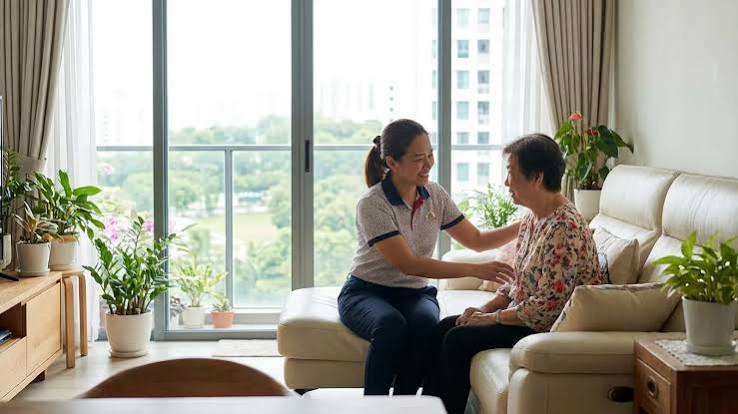
You can employ a migrant domestic worker (MDW), commonly known as a maid or domestic helper. A full-time helper usually lives in your home and can assist with daily household responsibilities such as cleaning, cooking, laundry and, depending on the agreed role and her experience, looking after children or helping elderly family members.

Unlike part-time cleaning services, employing a full-time helper means becoming an employer under Singapore's Ministry of Manpower (MOM) regulations. You will need to apply for a Work Permit, pay a monthly foreign worker levy and meet your responsibilities towards the helper.
This article focuses on how to hire a full-time domestic helper in Singapore.
Step-by-step guide to hiring a full-time helper
Here are the steps to take, from checking eligibility to completing the requirements after arrival.
Step 1: Check whether you are eligible to hire a helper
Before starting your search, check whether you meet MOM's eligibility requirements.
Generally, an employer must:
- Be at least 21 years old.
- Not be an undischarged bankrupt.
- Have the mental capacity to understand and fulfil the responsibilities of an employer.
- Be able to financially support the helper and provide suitable accommodation.
MOM assesses applications based on the employer's circumstances. If you are unsure whether you qualify, check the eligibility requirements before paying an agency or making arrangements.
There are also requirements for the helper. These include being from an approved source country or region, meeting the applicable age requirements and having the required education qualifications.
Check MOM website for the latest criteria.
Step 2: Decide where and how you want to hire a helper
There are two main ways to hire a full-time domestic helper in Singapore.
Option A: Hire through a licensed maid employment agency
This is the route many first-time employers choose.
A licensed employment agency (EA) can help you shortlist suitable candidates, arrange interviews, explain the paperwork and coordinate the Work Permit application and arrival arrangements.
You can find licensed agencies through MOM's online Employment Agencies Directory.
When comparing agencies, look beyond the advertised package price. Check their customer ratings, experience, retention rates and transfer rates. These indicators can help you understand how well an agency supports employers and helpers after placement.
You can also ask whether the agency offers a replacement policy if the initial arrangement does not work out.
Option B: Hire a helper directly
MOM allows employers to hire a migrant domestic worker directly without using an employment agency.
This can reduce agency-related costs, but the employer has to take responsibility for finding a suitable candidate, checking her details, arranging the necessary paperwork and coordinating the hiring process.
Direct hiring may be more suitable for employers who already know the helper, perhaps through a personal recommendation or an existing connection.
However, there may be additional requirements imposed by the helper's home country. For example, some countries require specific employment contracts or documentation before a worker can leave for Singapore. Check these requirements with the relevant embassy or authorities.
Important: Always make sure that the person you are hiring is eligible to work in Singapore and that the correct Work Permit process is followed.
Step 3: Choose between a new helper and a transfer helper
Once you decide how to hire, you need to consider what type of helper would suit your household.
There are two common options.
1. New helper from overseas
A new helper is recruited from her home country and brought to Singapore for employment.
She may have previous domestic work experience in her home country or elsewhere, or she may be taking up her first overseas domestic work position.
This option gives you access to a wider pool of candidates, but you may need to spend more time understanding her experience, communication skills and familiarity with Singapore households.
2. Transfer helper already in Singapore
A transfer helper is someone who is already working in Singapore but is moving from one employer to another.
The advantage is that she may already understand how households in Singapore operate, and you can interview her to understand her experience and expectations.
However, the transfer must be properly arranged. Her current employer must provide written consent for the transfer, and the new Work Permit must be issued under your name before she starts working for you.
A transfer helper may also be able to start sooner than someone who needs to travel from overseas.
Step 4: Shortlist and interview potential helpers
This is one of the most important parts of the process. A helper may have good references and experience, but it is equally important to understand whether her skills and expectations match your household.
Before approaching an agency, make a list of what you need help with.
For example:
- General household cleaning and maintenance
- Cooking and meal preparation
- Laundry and ironing
- Looking after young children
- Helping elderly family members
- Caring for pets, if relevant
Be clear about the responsibilities you expect the helper to take on. If childcare or elderly care is a major part of the role, look for someone with relevant experience and discuss the responsibilities in detail.
During the interview, consider asking:
- How many years of domestic work experience do you have?
- Have you worked in Singapore before?
- What household responsibilities have you handled?
- Are you comfortable cooking the type of food your family eats?
- Have you looked after young children or elderly people?
- What languages are you comfortable communicating in?
- What are your salary expectations and rest-day preferences?
You can arrange an in-person interview if the helper is already in Singapore. For overseas candidates, agencies can usually arrange a video or telephone interview.
Ask the agency for the helper's biodata and employment history. MOM also provides an eService through which prospective employers can access relevant information about a candidate's past employment.
Remember that an interview should be a two-way conversation. The helper should also understand your household, the work expected of her, her accommodation and the employment terms before agreeing to the job.
Step 5: Complete the required employer training
If you are hiring a domestic helper for the first time, you will generally need to complete the Employers' Orientation Programme (EOP) before applying for her Work Permit.
The programme explains the responsibilities of employing a migrant domestic worker, including employment rules, the helper's well-being and the employer's obligations.
You should complete this before submitting the application. Check MOM's website for the latest course arrangements and exemptions, if applicable.
Step 6: Apply for the helper's Work Permit
Once you have selected a helper and agreed on the employment terms, the next step is to apply for her Work Permit.
You can apply directly through MOM's FDW eService using your Singpass, or authorise a licensed employment agency to handle the application.
You will generally need:
- The helper's passport details.
- Your personal and household details.
- Relevant income information.
- The helper's written consent for the Work Permit application.
The Work Permit application fee is S$35.
According to MOM, applications submitted through the FDW eService are generally processed within one week, unless additional information is required. Applications submitted through the alternative application form may take up to three weeks for most cases.
If approved, you will receive an In-Principle Approval (IPA) letter. This contains important employment details, including the declared salary and other terms. The helper should receive the letter before travelling to Singapore.
For a transfer helper, the application must include the current employer's written consent and follow the transfer arrangements stated by MOM.
Step 7: Arrange insurance, security bond and travel
Before the helper arrives in Singapore, employers must complete several important arrangements.
Security bond
For a non-Malaysian helper, the employer must purchase a S$5,000 security bond. This is a guarantee to the Government that the employer and helper will comply with the relevant Work Permit conditions. It is not normally a S$5,000 cash payment, but an insurance or bank guarantee arrangement.
The employer cannot ask the helper to pay for this bond.
Medical and personal accident insurance
Employers must also purchase the required medical and personal accident insurance before the helper arrives.
MOM requires medical insurance with at least S$60,000 annual coverage for inpatient care and day surgery. Personal accident insurance must provide at least S$60,000 in coverage.
Travel arrangements
If the helper is coming from overseas, coordinate her travel arrangements and check whether her home country requires additional documents or approvals before departure.
Make sure the security bond is effective from the date she arrives in Singapore. MOM warns that a helper may not be allowed to enter if the bond is not in effect.
Step 8: Complete the requirements after the helper arrives
Once the helper arrives, there are a few more steps before the hiring process is complete.
For a first-time helper:
- She must attend the Settling-In Programme (SIP) within seven days of arrival, excluding Sundays and public holidays.
- She must undergo a medical examination within 14 days of arrival.
The medical examination is required for all helpers.
You must also request the issuance of her Work Permit through MOM and pay the S$35 issuance fee. Depending on the case, she may need to register her fingerprints and photograph at the MOM Services Centre.
The Work Permit must be issued under your name before she starts working for you.
How long does it take to hire a full-time helper in Singapore?
The timeline depends on whether you are hiring someone who is already in Singapore or bringing in a helper from overseas.
| Hiring option | Indicative timeline |
|---|---|
| Transfer helper already in Singapore | Around 2 weeks, depending on transfer arrangements |
| New helper from overseas | Around 6–8 weeks, sometimes longer |
These are practical estimates rather than guaranteed timelines.
How much does it cost to hire a full-time maid in Singapore?
This is one of the biggest considerations for families.
The cost has two parts: the initial hiring expenses and the recurring monthly expenses.
Initial hiring costs
According to MOM's January 2026 parliamentary response, the median upfront recruitment outlay for hiring a new migrant domestic worker is around S$4,700.
MOM noted that approximately half of this amount consists of a loan to the helper which the employer subsequently recovers.
This is a median figure, not a fixed agency charge. The actual amount depends on the agency, the helper's recruitment arrangements, insurance and other costs.
Your initial expenses may include:
- Agency service and placement fees, if using an agency.
- Work Permit application fee: S$35.
- Work Permit issuance fee: S$35.
- Medical and personal accident insurance.
- Security bond arrangement.
- Medical examination and Settling-In Programme, where applicable.
- Air ticket and other travel-related expenses for an overseas hire.
- Any applicable home-country documentation or administrative costs.
Ask the agency for a written breakdown before making payment. Check what is included in the package and whether there are additional charges for replacement, transfer or other services.
Monthly foreign worker levy
Employers must pay a monthly levy for every migrant domestic worker.
The current MOM rates are:
| Levy category | Monthly levy |
|---|---|
| Normal rate – first helper | S$300 |
| Normal rate – subsequent helper | S$450 |
| Concessionary rate | S$60 |
Some households may qualify for the concessionary levy of S$60 per month. This generally applies to eligible families with a young child, an elderly person or a person with a disability.
Check MOM's eligibility criteria before including the concessionary rate in your budget.
Other monthly household expenses
In addition to salary and levy, remember to budget for:
- Food and daily necessities.
- Toiletries and personal essentials.
- Medical expenses not covered by insurance.
- Any agreed payment for rest days worked.
- Other reasonable household expenses.
Employers are responsible for providing suitable accommodation and meeting their obligations towards the helper's welfare.
What does the monthly budget look like?
For a family employing one helper at the normal levy rate, a simple illustration could look like this:
| Expense | Illustrative monthly amount |
|---|---|
| Helper's salary | S$850 (Approx.) |
| MOM levy – first helper | S$300 |
| Food and personal essentials | S$100–S$200 |
| Estimated monthly total | S$1,250–S$1,350 |
This is an illustrative budget, not a fixed cost. It excludes insurance, medical expenses, initial recruitment costs and other occasional expenses. A household eligible for the concessionary levy would pay S$240 less per month.
Sources
- Ministry of Manpower – Eight Steps to Hiring a Helper
- MOM – Work Permit Application
- MOM – Eligibility and Requirements
- MOM – Foreign Worker Levy
- MOM – Employment Agencies Directory
- MOM – Security Bond Requirements
- MOM – Insurance Requirements
- MOM – January 2026 parliamentary response on median recruitment outlay
Information checked in November 2026. Fees, eligibility requirements and employment rules may change. Always check the latest MOM requirements before hiring.
Where to verify: This article is general editorial information, not legal, immigration, medical or financial advice. Requirements can change. Check the relevant Singapore government agency or a qualified professional for advice about your situation.