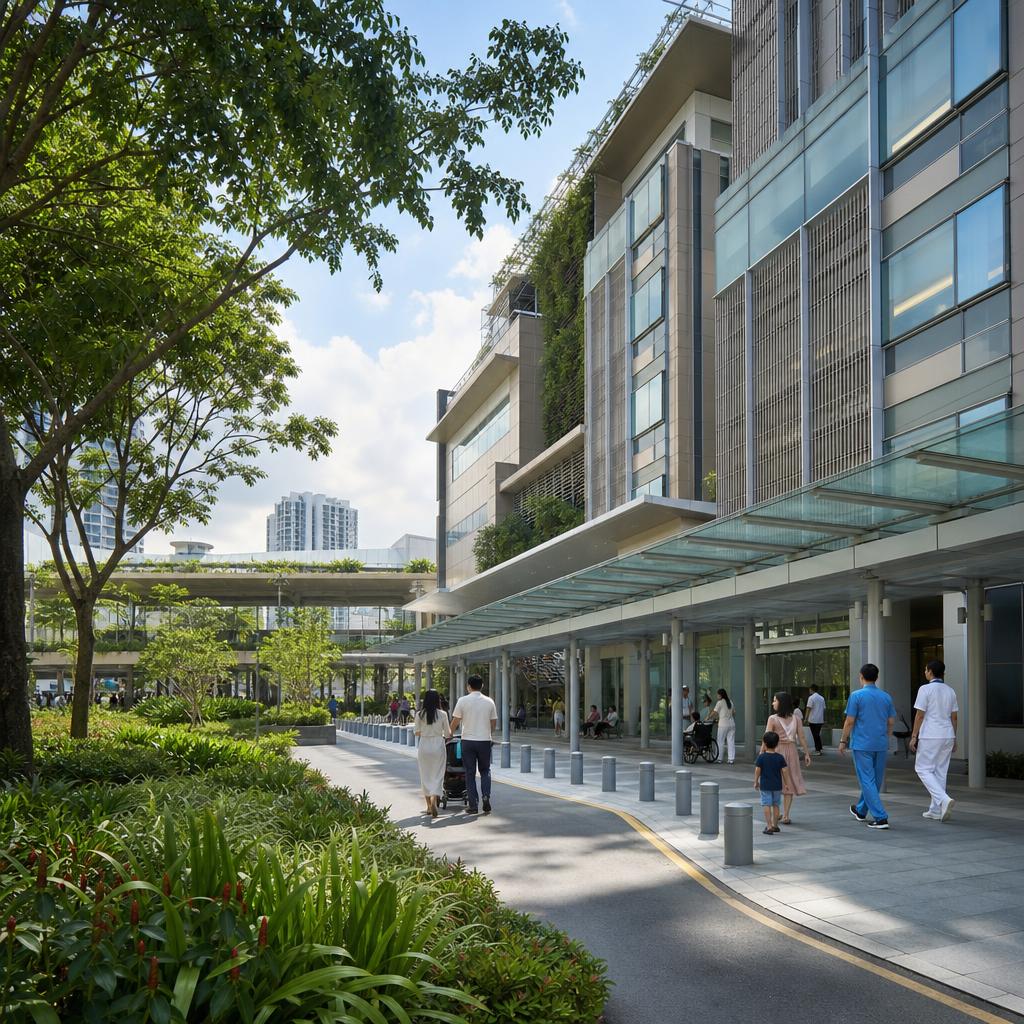
Singapore’s public and private hospitals both provide high-quality care, but their costs, appointment routes, doctor choice and insurance arrangements differ. There is no single best option for every family.
Public hospitals: the advantages
- Excellent medical facilities and strong specialist capabilities
- Major centres for complex, emergency and multidisciplinary care
- More affordable subsidised care for eligible Citizens and PRs
- Extensive links to national specialty centres and community care
Public hospitals: the trade-offs
- Potentially longer waits for non-urgent appointments
- Less choice of doctor through subsidised routes
- Less private accommodation in subsidised wards
- Foreign residents may face non-subsidised rates
Public hospitals remain available to foreign residents, but expats should ask for an estimate rather than assuming public means inexpensive.
Private hospitals: the advantages
- Greater choice of specialist
- Faster or more convenient appointment scheduling
- Private rooms and a more private patient experience
- Easier continuity with a chosen consultant in some cases
Private hospitals: the trade-offs
- Significantly higher charges
- Greater dependence on comprehensive insurance
- Panel, referral and pre-authorisation restrictions
- The hospital, doctor and treatment may each be assessed differently by an insurer
Before planned care, ask for an itemised estimate covering the specialist, anaesthetist, operating theatre, room, medication, tests and follow-up. Confirm the insurer’s annual limit, deductible, co-payment, panel arrangements and pre- and post-hospitalisation window.
What if you do not work?
A Dependant’s Pass or Long-Term Visit Pass does not automatically provide healthcare cover. Some employers cover spouses and children, but this depends on the benefits package. If you are not covered through your own or your spouse’s employer, personal insurance deserves serious consideration.
Foreigners facing difficulty with a public healthcare bill can ask to speak with a Medical Social Worker. Assistance is assessed case by case and should not be confused with automatic subsidy entitlement.
What changes if you become a PR?
Permanent Residents become covered by MediShield Life and participate in CPF, including MediSave. They may also receive public-healthcare subsidies, usually at lower levels than Citizens and subject to current rules, means-testing and ward class.
MediShield Life covers Citizens and PRs regardless of age or pre-existing conditions, but deductibles, co-insurance and claim limits still apply.
For emergencies, seek appropriate care or call 995 rather than delaying treatment to compare prices. For planned care, compare the complete cost and coverage—not only the headline hospital category.
Sources and further reading
Healthcare rules, services and insurance terms can change. Check current official guidance and your own policy before acting.
Where to verify: This article is general editorial information, not legal, immigration, medical or financial advice. Requirements can change. Check the relevant Singapore government agency or a qualified professional for advice about your situation.