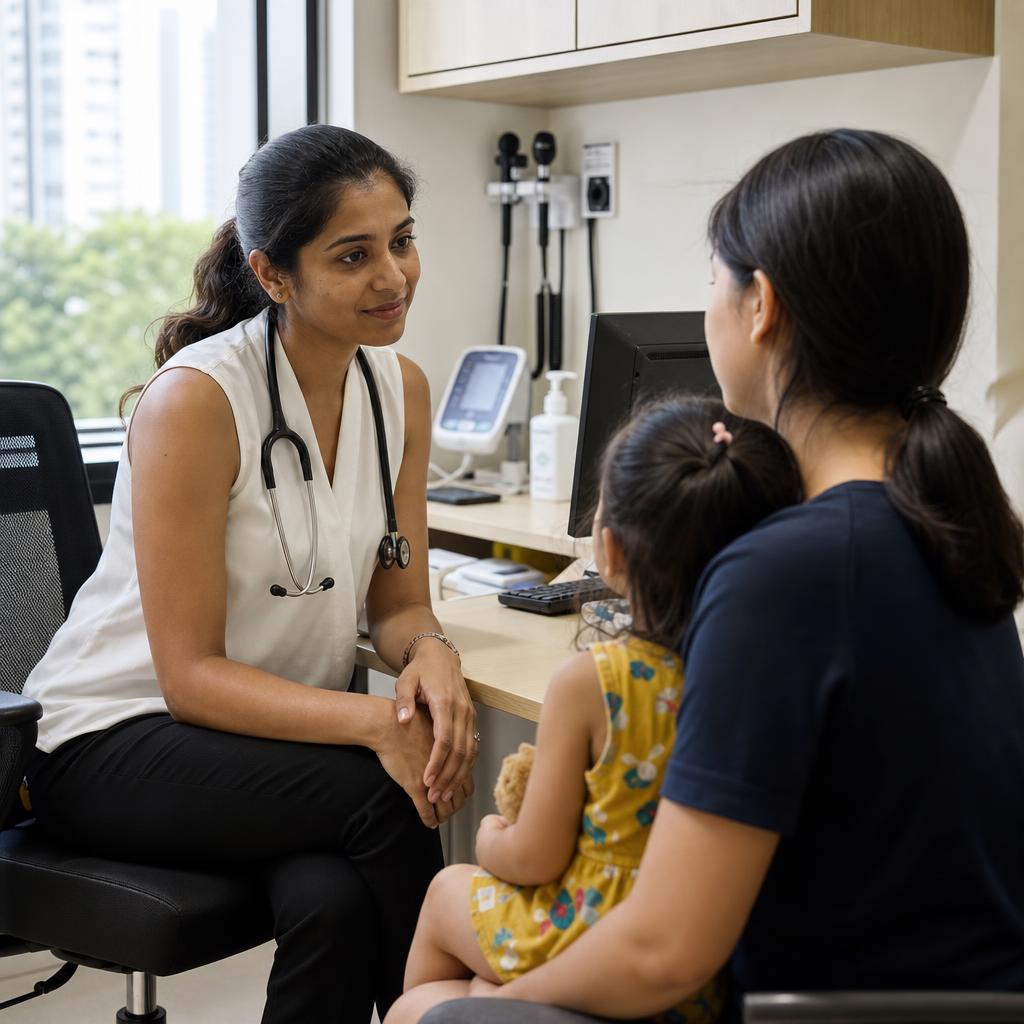
For most everyday illnesses, you do not need to go to hospital. Your first point of contact will usually be a General Practitioner.
What a GP can help with
- Flu, fever, coughs and colds
- Minor infections and skin conditions
- Stomach problems and headaches
- Minor injuries
- Common childhood illnesses
- Basic women’s health concerns
- Routine consultations and chronic-disease follow-up
Many GPs also provide vaccinations, health screenings, medical certificates, basic blood tests, medication and teleconsultations. If the condition needs specialist care, the GP can arrange a referral.
If your insurance requires a panel clinic or GP referral before specialist treatment, beginning with the correct GP can also protect your claim.
What are polyclinics?
Polyclinics are government-supported primary healthcare centres. They generally offer a broader range of services than a typical GP clinic.
- General consultations
- Chronic-disease management
- Women’s and children’s health
- Vaccinations and health screening
- Selected diagnostic and allied-health services
- Dental services at selected locations
They can be more affordable, particularly for Citizens and PRs receiving subsidies, but appointments are advisable and waits can be longer. Expats may use polyclinics, but should check current non-subsidised fees.
Public hospitals
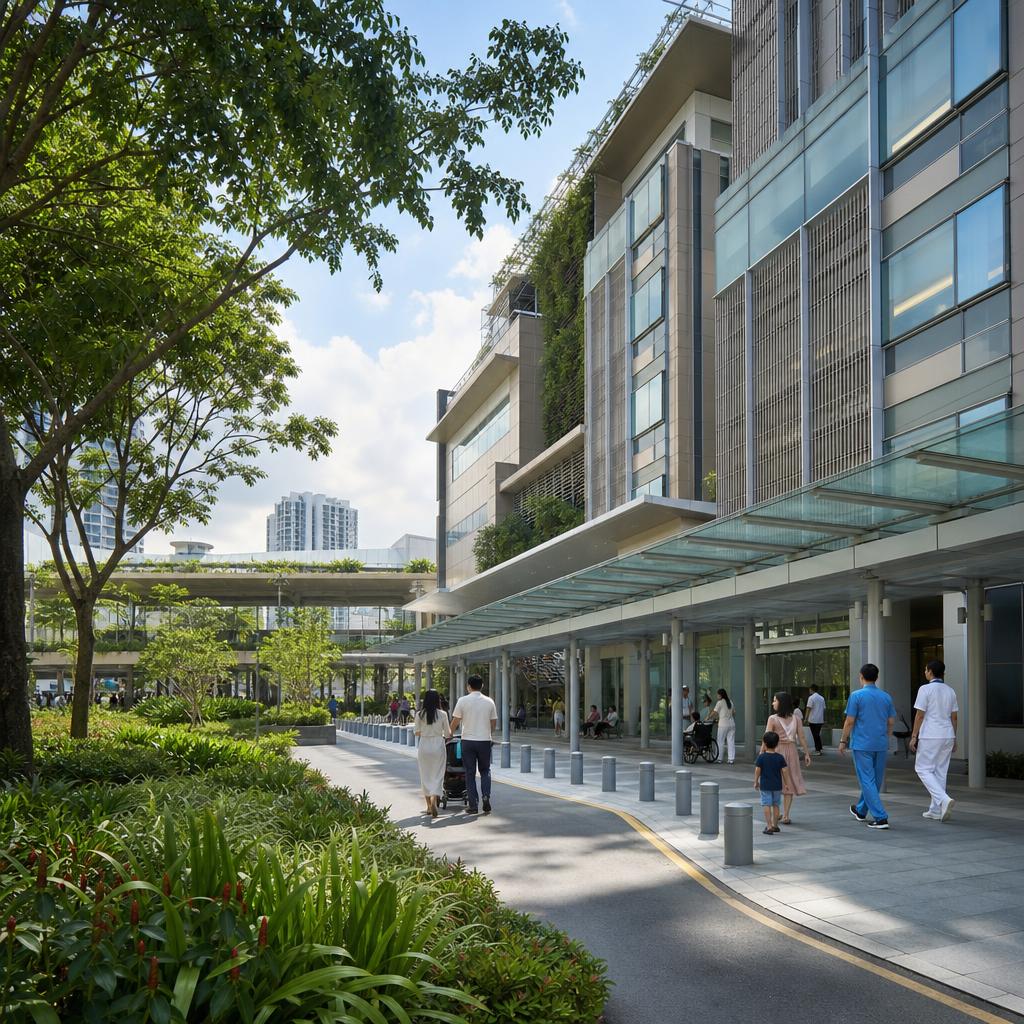
Major public hospitals include Singapore General Hospital, Tan Tock Seng Hospital, National University Hospital, Khoo Teck Puat Hospital, Changi General Hospital, Sengkang General Hospital and Ng Teng Fong General Hospital. KK Women’s and Children’s Hospital specialises in women’s and children’s care.
Public hospitals provide emergency departments, specialist services and complex care. For non-emergency specialist care, the route of referral can affect appointment timing, doctor choice, subsidy eligibility and cost.
Private hospitals
Private hospitals include Mount Elizabeth, Gleneagles, Raffles Hospital, Parkway East and Thomson Medical Centre. Private care often offers faster access and greater specialist choice, but fees can be significantly higher.
GP or A&E?
A mild fever, common cold, minor rash or routine health question usually belongs at a GP. Severe breathing difficulty, stroke signs, chest pain, major injury, uncontrolled bleeding, loss of consciousness or rapidly worsening symptoms require urgent assessment.
NurseFirst at 6262 6262 can advise on non-emergency conditions and suitable care options. For a life-threatening emergency, call 995.
Before anyone becomes ill, save the opening hours of a nearby GP, an after-hours option and your nearest suitable A&E.
Sources and further reading
Healthcare rules, services and insurance terms can change. Check current official guidance and your own policy before acting.
Where to verify: This article is general editorial information, not legal, immigration, medical or financial advice. Requirements can change. Check the relevant Singapore government agency or a qualified professional for advice about your situation.