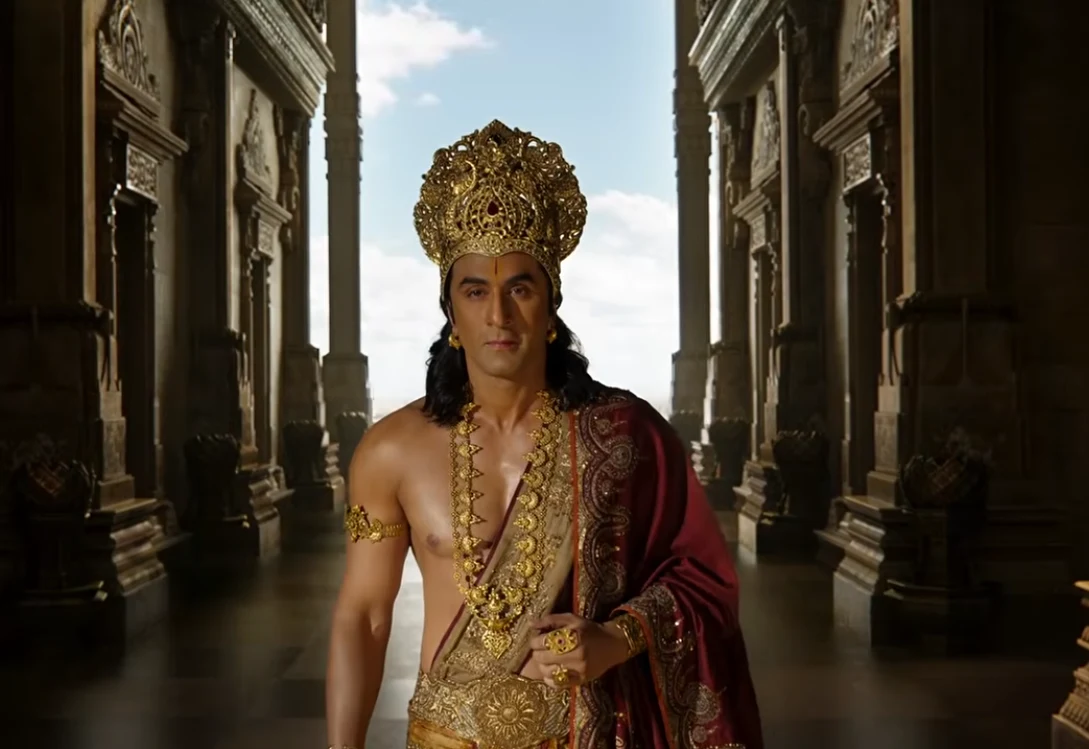
There is something deeply uncomfortable about writing about Ramayana as if it were just another movie.
That, perhaps, is the biggest challenge facing Namit Malhotra and the team behind this extraordinarily ambitious film.
Ever since the teaser — “This is our Ram” — dropped, there has been a lot of conversation around the casting of Ranbir Kapoor as Ram. The official trailer has only made that conversation bigger. And after watching it, I find myself torn between two very different emotions.
One part of me is genuinely excited.
The scale is breathtaking. The visuals look spectacular. The ambition is enormous. This is clearly not being made like a conventional Indian mythological film. With Nitesh Tiwari directing, Namit Malhotra producing, DNEG handling the visual effects, and Hans Zimmer and A.R. Rahman attached to the music, the makers are attempting to take one of India's oldest and most enduring stories to a truly global cinematic audience. The film is planned as a two-part epic, with the first part releasing in November 2026. (YouTube)
I understand exactly what Namit Malhotra is trying to do.
He has the global perspective, the technology, the financial muscle and, importantly, the ambition to tell an Indian story at a scale that can travel beyond India.
And we all want that to happen.
But there is another part of me that keeps asking one uncomfortable question:
Did the makers fully understand what it means to cast someone as Ram?
We are not starting with a blank canvas
For a certain generation of Indians, Ramayana isn't simply a story we know.
It is a memory.
It is Sunday morning.
It is the television being switched on.
It is the entire family sitting together.
It is shops closing and streets becoming unusually quiet.
The iconic 1987–88 Ramayan was created by Ramanand Sagar. The cultural phenomenon created by Sagar's Ramayan was extraordinary. People say that when the serial used to start there were empty streets, families gather around television sets and millions treating the weekly broadcast almost like a ritual. (ThePrint)
Arun Govil wasn't simply an actor playing Ram.
For many people, he became Ram.
Deepika Chikhalia wasn't simply playing Sita.
She became Sita in the public imagination.
The boundary between the actor and the character became incredibly thin.
There are stories of people touching Arun Govil's feet when they encountered him in public. Even decades later, that association remains so powerful that Govil has spoken about Ranbir Kapoor himself showing him that same traditional respect by touching his feet. (The Indian Express)
That is the baggage — or perhaps the blessing — that any actor taking on Ram has to carry.
And that is why I think the casting conversation around Ranbir Kapoor is not really about whether he is a good actor.
He absolutely is.
The problem isn't Ranbir the actor. It is Ranbir the image.
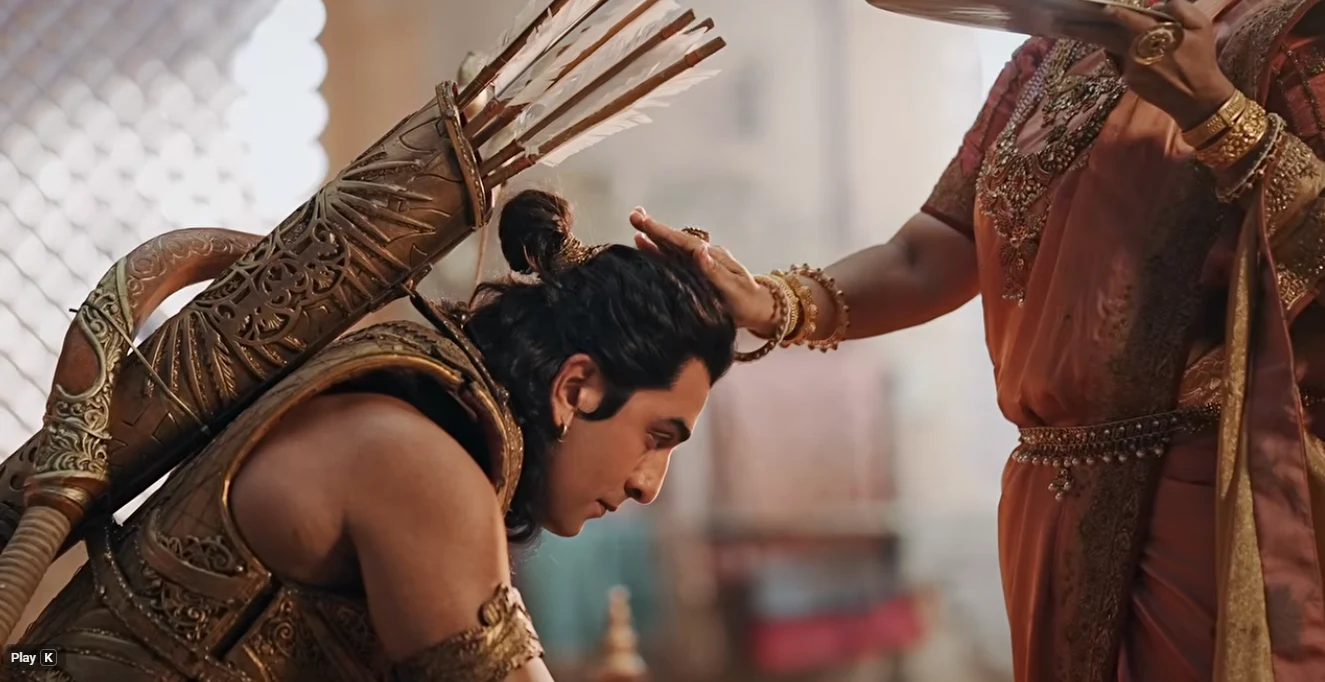
I would argue that Ranbir Kapoor is one of the most versatile and capable actors of his generation.
He has demonstrated range, vulnerability, intensity and sincerity across very different characters.
So, I don't question whether he can act Ram.
I question whether audiences will be able to see Ram when they look at Ranbir.
And that is a very different question.
Ram is not just another character.
In the Hindu tradition, Ram is revered as Maryada Purushottam — an ideal of conduct, duty, restraint and righteousness. That creates a completely different expectation from the audience.
When you cast an actor as a fictional superhero, audiences can separate the actor from the character.
When you cast someone as Ram, millions of people may not make that separation so easily.
They aren't necessarily going to analyse the performance in terms of acting technique, screenplay interpretation or character construction.
They are going to feel:
“Does this look like my Ram?”
And that is a much harder test.
Ranbir will be judged by a standard that has nothing to do with acting.
This is where I think the makers may have underestimated the complexity of the casting.
Ranbir comes with an enormous amount of cultural baggage of his own.
People know his family. They know his lifestyle. They know his public persona. They know his relationships, his celebrity life and the controversies and discussions that have surrounded him over the years.
That doesn't make him a bad person.
It doesn't even make him a bad choice as an actor.
But it does mean that audiences are not meeting an unknown actor for the first time.
They are meeting Ranbir Kapoor.
And then they are being asked to accept him as Ram.
That gap is enormous.
You cannot completely whitewash an established public image through makeup, costumes, Sanskrit verses or VFX.
The audience carries what it already knows into the theatre.
And perhaps that is unfair.
But it is also real.
The irony is that Ranbir himself may be one of the few actors capable of overcoming that gap through performance.
If he is extraordinary in the role, audiences may eventually forget Ranbir and start seeing Ram.
Actors have done this before.
And audiences have surprisingly short memories when confronted with a genuinely powerful performance.
So I sincerely hope I am wrong.
I hope Ranbir surprises all of us.
I hope he walks into the theatre and, somewhere between the first scene and the final frame, the actor disappears and the character takes over.
The rest of the casting?
The other casting choices have also generated discussion.
But honestly, I don't think any of them carry the same weight as the casting of Ram.
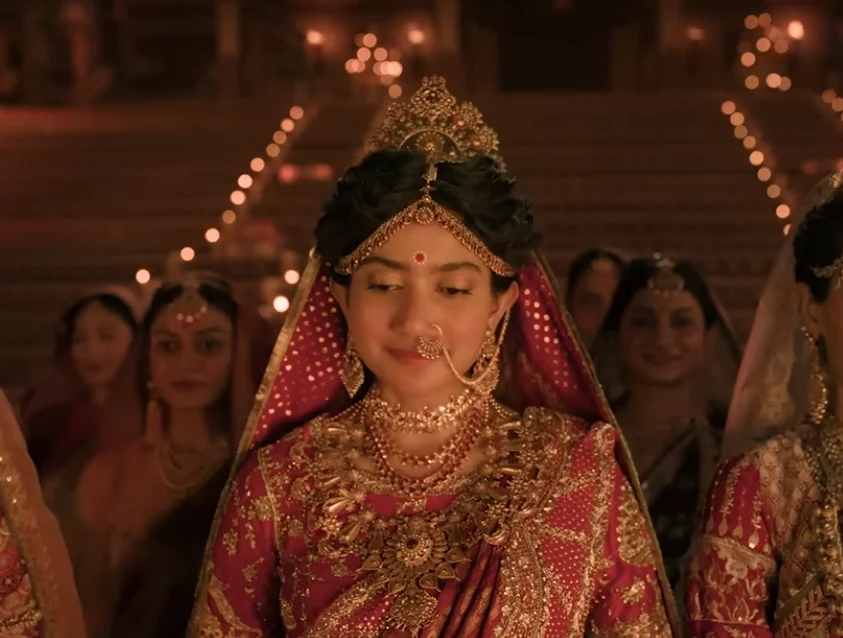
Sai Pallavi as Sita, Yash as Ravana, Sunny Deol as Hanuman and Ravi Dubey as Lakshman are all significant choices, but the emotional burden attached to Ram is uniquely difficult.
And Yash's Ravana, in particular, has the potential to be fascinating because Ravana is not simply a villain. He is one of the most complex characters in the epic — powerful, learned, ambitious, devoted and ultimately destroyed by his own choices.
The film will have to do much more than create spectacular battles.
It will have to create characters that people emotionally believe in.
The global ambition is absolutely right
This is where I actually understand and support the larger vision behind the film.
Why shouldn't an Indian epic be presented to the world with the kind of scale usually reserved for Hollywood franchises?
Why shouldn't the Ramayana be experienced by audiences in New York, London, Singapore, Dubai, Tokyo or Los Angeles?
The production team clearly wants this to be a global Indian cinematic event. The film is being distributed internationally by Sony Pictures, with the first part planned for worldwide theatrical release in November 2026. (Sony Pictures)
And that ambition is exciting.
But India cannot be an afterthought
This is where I struggled with some of the recent marketing.
The recent promotional event involving MrBeast was clearly designed to create international buzz. Ranbir helped MrBeast say “Jai Shree Ram”, and the event generated plenty of attention online. (The Indian Express)
But personally, I found the whole exercise underwhelming.
Not because MrBeast is irrelevant.
Quite the opposite. He has an enormous global audience.
But Ramayana is not simply a product that needs global awareness.
It needs emotional acceptance in India.
The overseas Indian audience is important. The global audience is important. International dollars matter enormously for a film of this scale.
But the heart of this story remains India.
If Indians don't emotionally accept the film, no amount of international marketing can manufacture that connection.
You can sell a spectacle globally.
You cannot manufacture devotion.
And that is why the marketing needs to understand the difference between making noise around Ramayana and building reverence around Ramayana.
Those are not necessarily the same thing.
Sometimes the biggest risk is the absence of someone saying, “Are we sure?”
Watching the entire project unfold, I also wonder about something else.
When you have a film of this size, with enormous budgets, huge stars, international partners, cutting-edge visual effects and an equally enormous commercial expectation, everyone around the table has a reason to believe in the project.
And that is exactly when you need someone who is willing to say:
“Wait. Are we sure?”
Are we sure about the casting?
Are we sure about the tone?
Are we sure about the marketing?
Are we sure that what looks spectacular to us will feel authentic to the audience?
Are we sure that we are not solving for global perception while underestimating Indian emotion?
Sometimes the most dangerous environment for a massive project is one where everyone in the room is too invested to challenge the decision.
You need someone willing to rock the boat.
Someone who understands that saying “this doesn't feel right” is not negativity.
It is responsibility.
Because nobody wants to be the person who challenges a decision when billions of rupees, years of work and thousands of people's efforts are riding on it.
But that is precisely when you need that person.
And yet, I want this film to succeed
After saying all of this, I don't want this to become another piece attacking Ramayana before it has even reached theatres.
Quite the opposite.
I want this film to succeed.
I want Indian cinema to be able to make something this ambitious.
I want our mythology to be presented with extraordinary technology without losing its soul.
I want international audiences to discover the richness of Indian storytelling.
And most importantly, I want a new generation to experience the Ramayana — not necessarily in the same way my generation did, but in a way that makes them curious enough to go back and discover the original story.
That is the opportunity sitting in front of Namit Malhotra, Nitesh Tiwari and the entire team.
The trailer has certainly made the film look enormous.
Now comes the much harder part.
Can they make it feel sacred?
Because Ramayana doesn't need to convince us that it is big.
We already know it is.
It doesn't need to convince us that Ram is powerful.
We already know that too.
The real challenge is much simpler — and much harder:
Can we look at Ranbir Kapoor and, even for a few hours, stop seeing Ranbir Kapoor?
Can we see Ram?
I sincerely hope the answer is yes.
And I cannot wait to find out in a theatre.
Hopefully, Singapore gets to experience it at the same time as the international markets. The film is currently scheduled for international release on 6 November 2026, with the India release planned around Diwali. (NDTV)
Until then — all the very best to the makers.
Sources and further reading
This is an opinion article. Singapore release update: Sony Pictures Singapore currently lists Ramayana: Rise of a Legend in cinemas on 5 November 2026. The article’s 6 November reference concerns the reported international release. Release dates, screenings and availability can vary by market; check the distributor and local cinema listings for current details.
- Sony Pictures Singapore — Ramayana: Rise of a Legend, local release and cast
- YouTube — Ramayana video cited in the article
- The Indian Express — Arun Govil on Ranbir Kapoor and Ramayana
- The Indian Express — Ranbir Kapoor and MrBeast at the Ramayana event
- NDTV — Ramayana release dates in India and overseas
Where to verify: This article is general editorial information, not legal, immigration, medical or financial advice. Requirements can change. Check the relevant Singapore government agency or a qualified professional for advice about your situation.