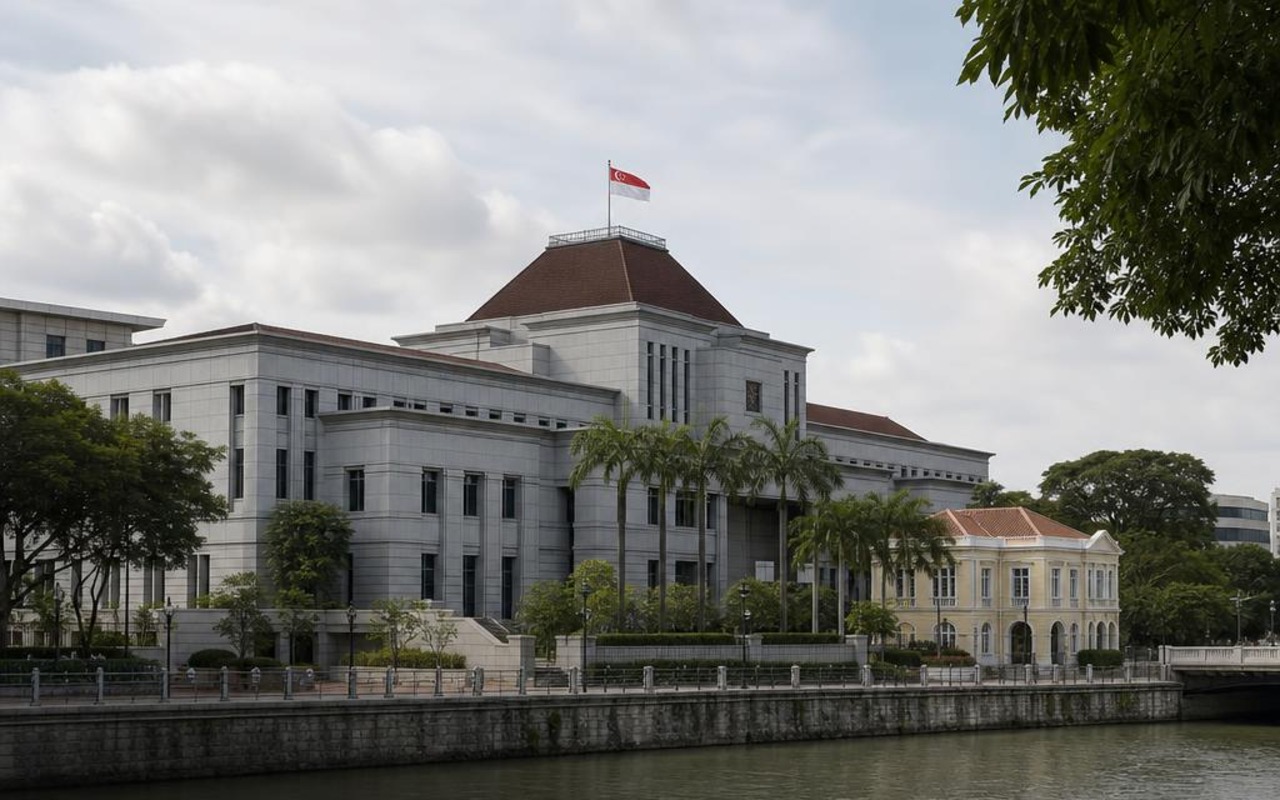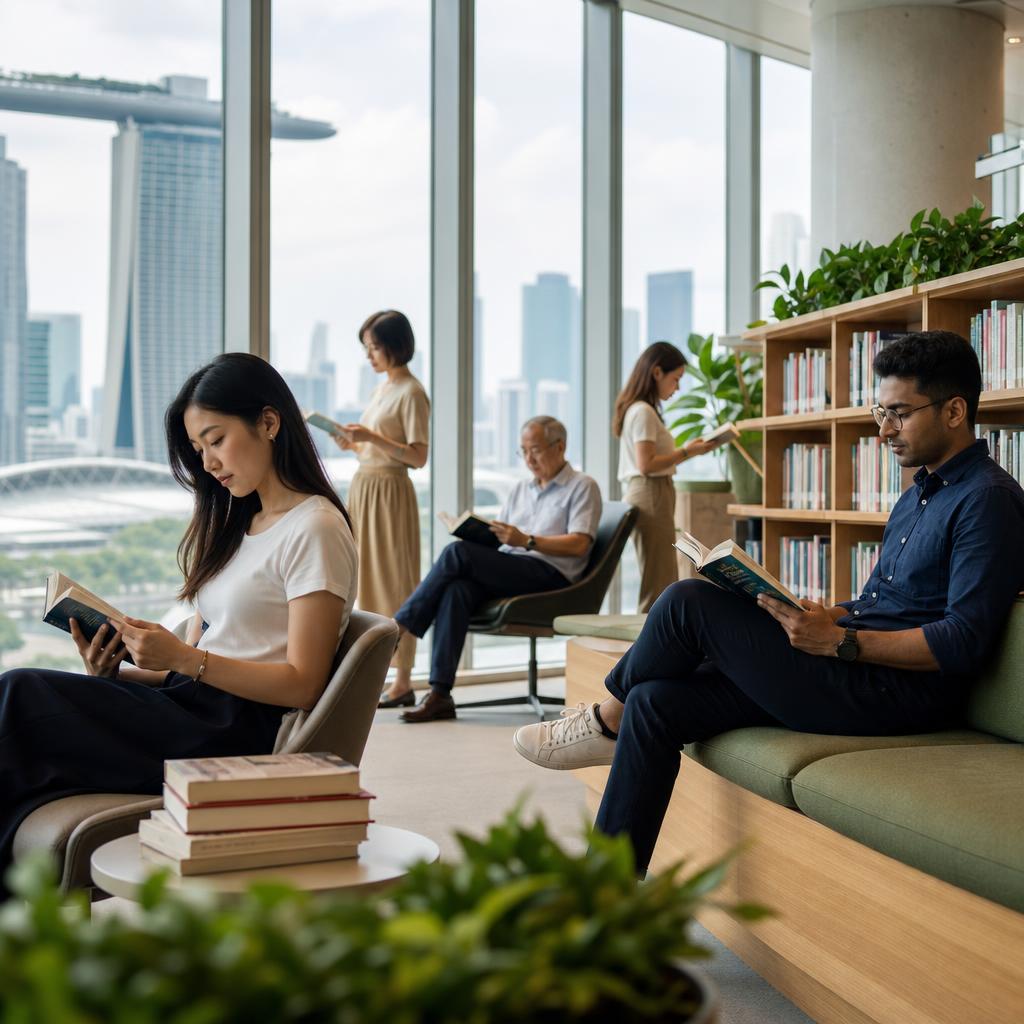
Singapore has introduced an unusual way to encourage people to put down their phones and pick up a book: offering a small reward for reading every day.
The ReadSG movement was launched by the National Library Board on 6 September 2026. Its inaugural ReadSG Challenge asks participants to read for at least 15 minutes a day and record their sessions through GovTech’s CrowdTaskSG platform.
How does the programme work?
Participants log one reading session a day, and each qualifying session must last at least 15 minutes. A successful daily submission earns 20 virtual coins.
CrowdTaskSG values 1,000 coins at S$1. At the basic daily rate, a reader would therefore need 50 qualifying sessions to accumulate S$1. Additional coins may be available for reading levels, selected event participation and the post-challenge survey.
The financial reward is small by design. This is less an income scheme than a habit-building experiment that gives people an immediate reason to begin and a visible way to track consistency.
The inaugural challenge runs as a pilot from 6 September to 31 December 2026. NLB says later enhancements may incorporate participant feedback, while the wider ReadSG movement is planned as a five-year national campaign.
Why is Singapore encouraging people to read?
The programme arrives when much of daily attention is spent on short-form video, social feeds and quickly consumed digital content.
NLB has linked ReadSG to the value of sustained reading—the kind that requires someone to remain with an argument, story or idea instead of moving immediately to the next headline, clip or post.
NLB chief executive Melissa Tam described reading as a muscle that strengthens focus, understanding, critical thinking and imagination when used regularly. The programme begins with a deliberately achievable goal: 15 minutes on the bus, during lunch or before bed.
The initiative also sits within a wider Singapore conversation about excessive social-media use and its possible effects, particularly on younger users.
Singapore is already a strong reading performer
This is not a story about a country without strong literacy or educational outcomes.
Singapore was among the highest-performing education systems across science, mathematics and reading in the OECD’s PISA 2025 results, released on 8 September 2026.
The issue is therefore less about basic reading ability and more about what people choose to read, how regularly they read books and whether they can sustain attention.
NLB’s 2024 National Reading Habits Study found that 89% of adult respondents read more than once a week, but only 28% read books. The broader figure includes material such as news, websites and social-media articles.
Why pay people to read?
At first, S$1 for 50 days of qualifying reading can seem almost symbolic. That may be the point.
The programme uses gamification: it turns a desired behaviour into something people can record, repeat and gradually build into a habit. The approach is similar to fitness programmes that encourage a daily number of steps.
The reward provides an immediate incentive, while the intended benefit is the reading habit itself. The larger question is whether participants continue once the novelty or reward disappears.
A changing relationship with attention
People now have access to more information than ever. A few taps can produce news, videos, opinions, summaries and entertainment. But access to information is not the same as spending time understanding it.
Reading a book requires a different kind of attention. A reader must stay with an idea, follow an argument, understand characters or absorb information over a longer period.
That can be difficult in an environment designed around constant scrolling and rapid consumption. ReadSG is therefore not only about reading more books; it is also an attempt to protect a small amount of uninterrupted attention.
Will S$1 change reading habits?
That remains to be seen. The challenge is new, and the pilot continues until the end of 2026. NLB says future changes will take participant feedback into account.
But the experiment reflects a striking feature of modern life: a country known for strong educational outcomes is testing incentives to help people spend a little less time scrolling and a little more time reading.
Perhaps the most interesting part is not the S$1. It is the idea that 15 quiet minutes a day might be worth protecting.
Sources and further reading
Entry rules, prices, schedules and opening hours can change. Check current official guidance before booking or travelling.
Where to verify: This article is general editorial information, not legal, immigration, medical or financial advice. Requirements can change. Check the relevant Singapore government agency or a qualified professional for advice about your situation.