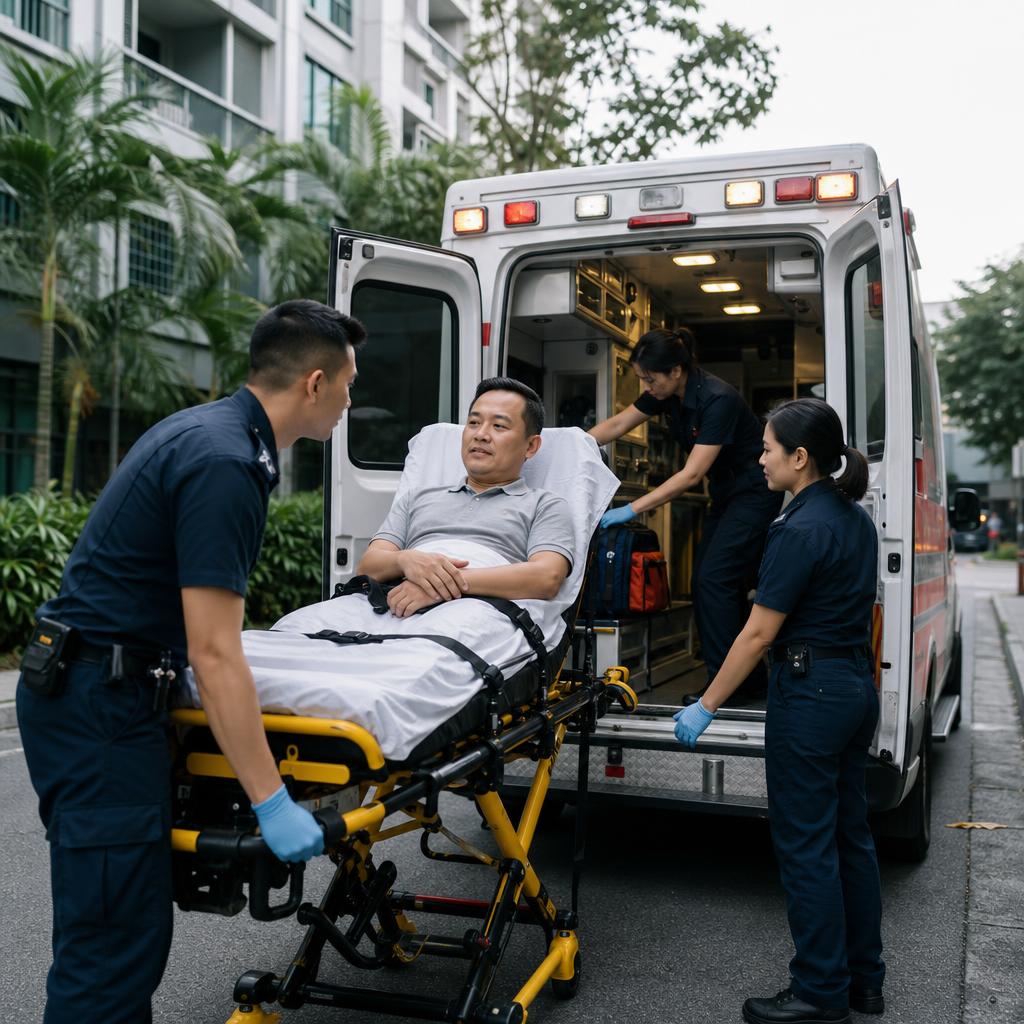
This is the number every expat family should save: 995 for an emergency ambulance. SCDF operates Singapore’s 24-hour Emergency Medical Services system.
When to call 995
- Cardiac arrest or possible heart attack
- Signs of stroke
- Severe breathing difficulty
- Loss of consciousness
- Major trauma or serious accident
- Severe or uncontrolled bleeding
- Prolonged or serious seizures
If symptoms appear life-threatening or are deteriorating rapidly, do not delay care while checking insurance.
What to tell the operator
Give the exact location, including the building, unit or landmark, explain what happened and answer the operator’s questions. Follow instructions while help is on the way.
If you live in a condominium or secured building, ask someone to meet the crew and arrange access. Keep the patient’s identification, medication list, allergies and medical conditions available where possible.
If it is not an emergency
A GP, urgent-care service or teleconsultation is generally more appropriate for mild fever, a common cold, a minor rash, a mild stomach upset or a routine question.
NurseFirst at 6262 6262 provides non-emergency medical advice and can direct callers to an appropriate care option. Private ambulance operators may be used for non-emergency transport.
SCDF has announced that the 1777 non-emergency ambulance hotline will cease from 1 January 2027. Use SCDF’s current official page for private ambulance contacts and fees.
What happens at A&E
The broad process is:
- Registration
- Triage
- Medical assessment
- Tests and treatment
- Discharge or hospital admission
Triage is important: patients are prioritised by clinical urgency, not simply by arrival time. Someone arriving later with a life-threatening condition may be seen first.
If you are admitted
The hospital should explain the treatment, ward, estimated charges, insurance arrangements and any deposit or payment requirement. Tell the hospital about insurance as early as practical and ask whether pre-authorisation or a letter of guarantee is needed.
Save your insurer’s emergency hotline and policy details on both adults’ phones. Caregivers should also know where to find the information.
Sources and further reading
Healthcare rules, services and insurance terms can change. Check current official guidance and your own policy before acting.
Where to verify: This article is general editorial information, not legal, immigration, medical or financial advice. Requirements can change. Check the relevant Singapore government agency or a qualified professional for advice about your situation.