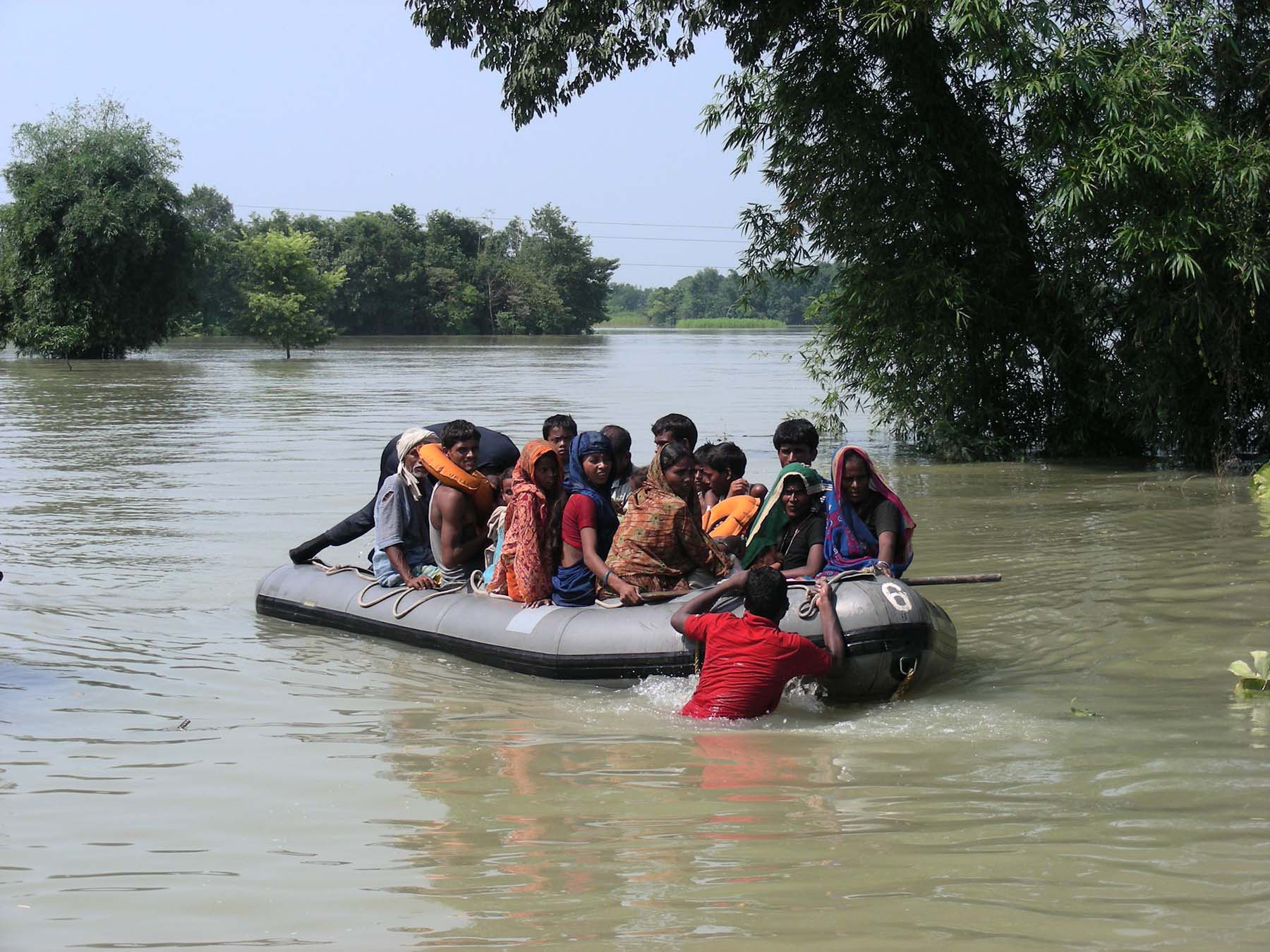
Archive photograph: flood victims being rescued by Navy personnel in Bihar, 2008. Photo: Ministry of Defence / Press Information Bureau, via Wikimedia Commons. Reused under the Government Open Data License – India. The original photograph is unmodified; responsive previews may crop its display. No endorsement is implied.
For those who don’t know, Bihar floods are not new. They arrive every single year, and every year we witness the exact same circus. News outlets run dramatic coverage of the rising waters, portray the suffering of victims, and air the same familiar complaints about how the government isn't paying attention.
You can raise your voice once or twice. You can bring an issue to the government’s notice a few times. But when a disaster remains completely unaddressed for decades, what more can anyone even say to fix it?
There are many reasons why this problem never gets fixed, and I am just another citizen who has been forced to watch this tragedy play out year after year.
And now, I have lost hope.
I don’t feel the same way I used to a few years ago. It isn't just that I have lost faith in the system. I have also lost faith in our collective ability to demand better.
I am not talking about the thousands of Biharis living outside the state or abroad who watch from afar and feel utterly helpless. They still care deeply about the wretched condition of their homeland, even if it doesn't affect their families directly every single day.
But within the state, it often feels as though the people who are most vulnerable have the least power to demand change. Which caste do the victims belong to? Let the leaders of that caste worry about it. That seems to have become an unspoken rule.
And this is where Bihar's political paradox becomes difficult to understand. I was deeply enlightened by reading Mrityunjay Sharma’s book, Broken Promises. Even coming from a political background, his writing offers a stark glimpse into the incredible complexity of Bihar's history, its politics and what this land has endured over the decades.
Bihar’s political scene is always one of the most talked-about in the country. Everyone watches the decisions made by the people of Bihar with bated breath. Yet look at the reality.
A renowned strategist like Prashant Kishor, who helped politicians win across India, struggled to make a dent in his own home state. The strategies that worked elsewhere failed to break the deep-rooted electoral mechanics of Bihar, where his party, Jan Suraaj, couldn't win a single seat.
Reports also surfaced around the elections about direct cash transfers to voters. Whether one agrees with the politics behind it or not, the larger point is difficult to ignore: the machinery and incentives surrounding elections in Bihar are incredibly complex and deeply entrenched.
It isn't that Biharis lack political awareness. Quite the opposite.
Every person on the street seems to have an opinion about politics, leaders, caste, governance and who should win. Political awareness runs incredibly deep.
But there is another irony.
Even today, status, government power and administrative positions often hold far more value than business or enterprise. Becoming an IAS officer can carry more prestige than building a successful company. Making money through enterprise is sometimes looked down upon compared with securing a powerful government position.
And yet these same proud Biharis are forced to migrate to other states for basic survival.
They leave their homes because there are not enough jobs. And in the places they migrate to, many are routinely abused, beaten, stereotyped or treated as second-class citizens. They work long hours for wages that are often barely enough to survive, let alone build a better future for their children.
That contradiction should hurt us.
Coming back to the flood victims, there are endless questions for the system—but perhaps even harder questions for the society that has learned to live with this reality.
Why is there a devastating flood every year, yet no one in power ever seems to take meaningful, long-term action?
Why is no one held accountable?
Why do government officials, who work so hard to clear some of the most competitive examinations in the country, sometimes become more focused on personal gain and navigating the system than on solving the problems that the system exists to address?
What will it finally take for our blood to boil?
I have known people whose family members were police officers or senior government officials. Many are relatively wealthy. Their children study abroad or in top institutions outside the state. With state resources and networks at their disposal, they have enough power and money to navigate almost anything.
Their lives are rarely interrupted by rising water.
So why would the flood feel like an emergency to them?
Look at who actually gets destroyed by these floods.
It is the people living in humble huts whose homes can be swept away in minutes.
It is the daily-wage worker who has to run with whatever belongings they can carry, find temporary shelter, wait on embankments until the water recedes, and then return to rebuild a mud house from scratch.
They don't have savings to fall back on. They don't have another house in another city. They don't have influential relatives to call.
They simply start again.
Who truly cares about a daily-wage worker?
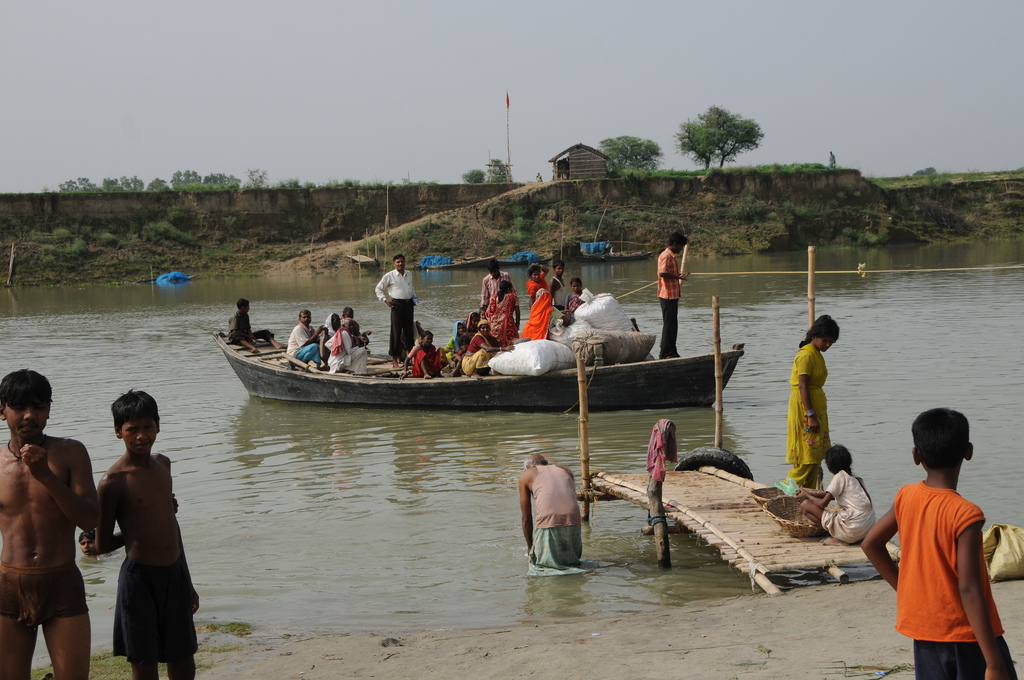
And the damage doesn't stop with a destroyed home.
The repeated inability to protect communities—including parts of the capital and surrounding regions—from severe flooding also sends a message to businesses and investors. Why would a large investor confidently commit capital to a state where infrastructure remains so vulnerable every monsoon and where long-term solutions seem perpetually out of reach?
This is not just a flood problem.
It is a development problem.
It is an employment problem.
It is an infrastructure problem.
It is a governance problem.
And ultimately, it is a human problem.
People who once raised their voices are exhausted after watching this go on for generations.
Countless young Biharis have grown up watching this collapse and feeling completely powerless to change it. Many voted for the ruling coalition with the hope that political alignment with the Centre would finally bring investment, infrastructure and industries.
But what changed?
The same tired political dynamics remain.
And perhaps the uncomfortable truth is that it isn't always simply about politicians being unwilling. Sometimes the system itself lacks the administrative experience, knowledge, long-term planning and institutional accountability required to solve problems of this scale.
That may be even more frightening.
Because replacing one politician doesn't necessarily fix a system that has been broken for decades.
We also see public figures and young cultural icons—like the famous folk singer Maithili Thakur, who entered politics at a young age—frequently going viral or appearing at high-profile elite events.
There is nothing wrong with performing at grand events or building a public career.
But the painful contrast becomes impossible to ignore when people in their own state are struggling in floodwaters and there is little visible acknowledgement of their suffering.
Is it optics?
Do public figures simply want to avoid bringing national attention to Bihar's misery?
Perhaps.
But even if you don't want to broadcast the state's plight to the country, at least work behind the scenes. You don't have to turn every act of help into a social media post.
What hurts is the silence.
Because that silence makes things worse for Biharis.
Their suffering gets swept under the rug. Politicians continue to project normalcy, while media outlets sometimes turn around and ask commentators, celebrities or outsiders what they are doing for flood victims.
Public figures and celebrities like Sonu Sood will continue stepping in during disasters, making reels, raising funds and building their profiles along the way.
Kudos to him for helping people in distress wherever they are. He certainly deserves credit for it.
But a state should never have to depend on charity, celebrities and viral videos to keep its people from drowning.
Managing a disaster is not charity.
Protecting citizens is the responsibility of the state.
And this is where I think Bihar's young people have the biggest role to play.
The only people who can ultimately force real change are the young Biharis living there right now—the ones who experience these daily humiliations firsthand.
If they want better lives, better education, better jobs and a functioning system, they will have to demand it.
They will have to fight through the fear.
Through the survival mindset of families who can only think about their next two meals.
Through the opinionated know-it-alls who talk endlessly but rarely act.
And through the privileged elite who have benefited from the system and have little incentive to change it.
Because if the youth don't demand better, who will?
I am no expert.
I don't claim to have all the answers.
It is up to the state, its engineers, administrators and policymakers to figure out the technical, engineering and policy solutions. That is what they are paid to do.
I am just another Bihari who feels hopeless watching poor Biharis suffer day in and day out—both inside the state and across the country.
And perhaps that is why I am no longer talking about Bihar's flood victims as loudly as I once did.
Not because I don't care.
But because I am tired of caring about the same tragedy without seeing anything fundamentally change.
Bihar deserves better than that.