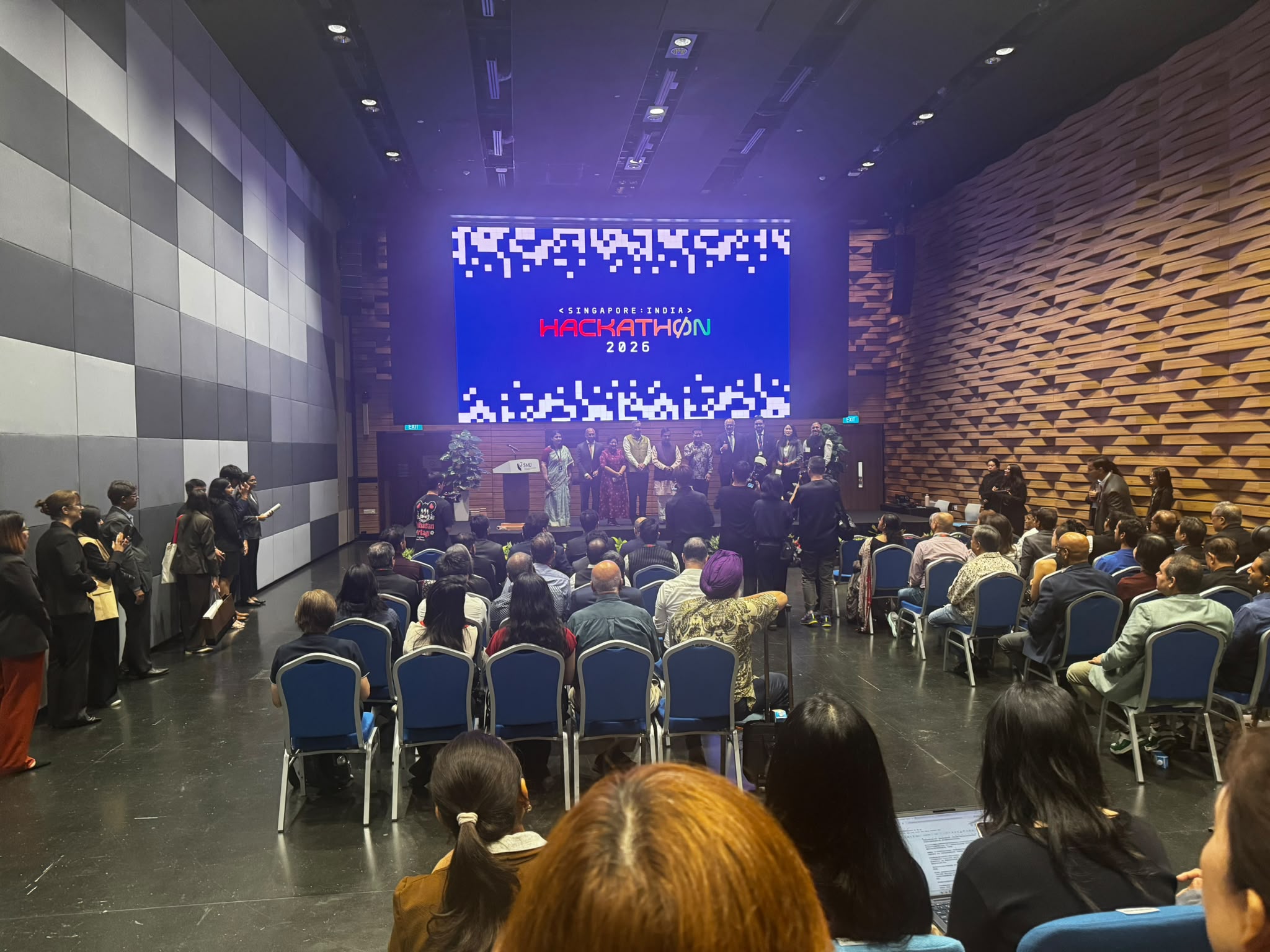
Singapore–India Hackathon, a bilateral initiative that has steadily evolved into an important platform for innovation, entrepreneurship and student collaboration between the two countries.
The fourth edition, hosted in Singapore-by-Singapore Management University (SMU) from 15 to 17 November 2026, brings together approximately 120 students from Singapore and India. Working in 20 cross-border teams, the participants are challenged to develop practical solutions to industry problems over three days.
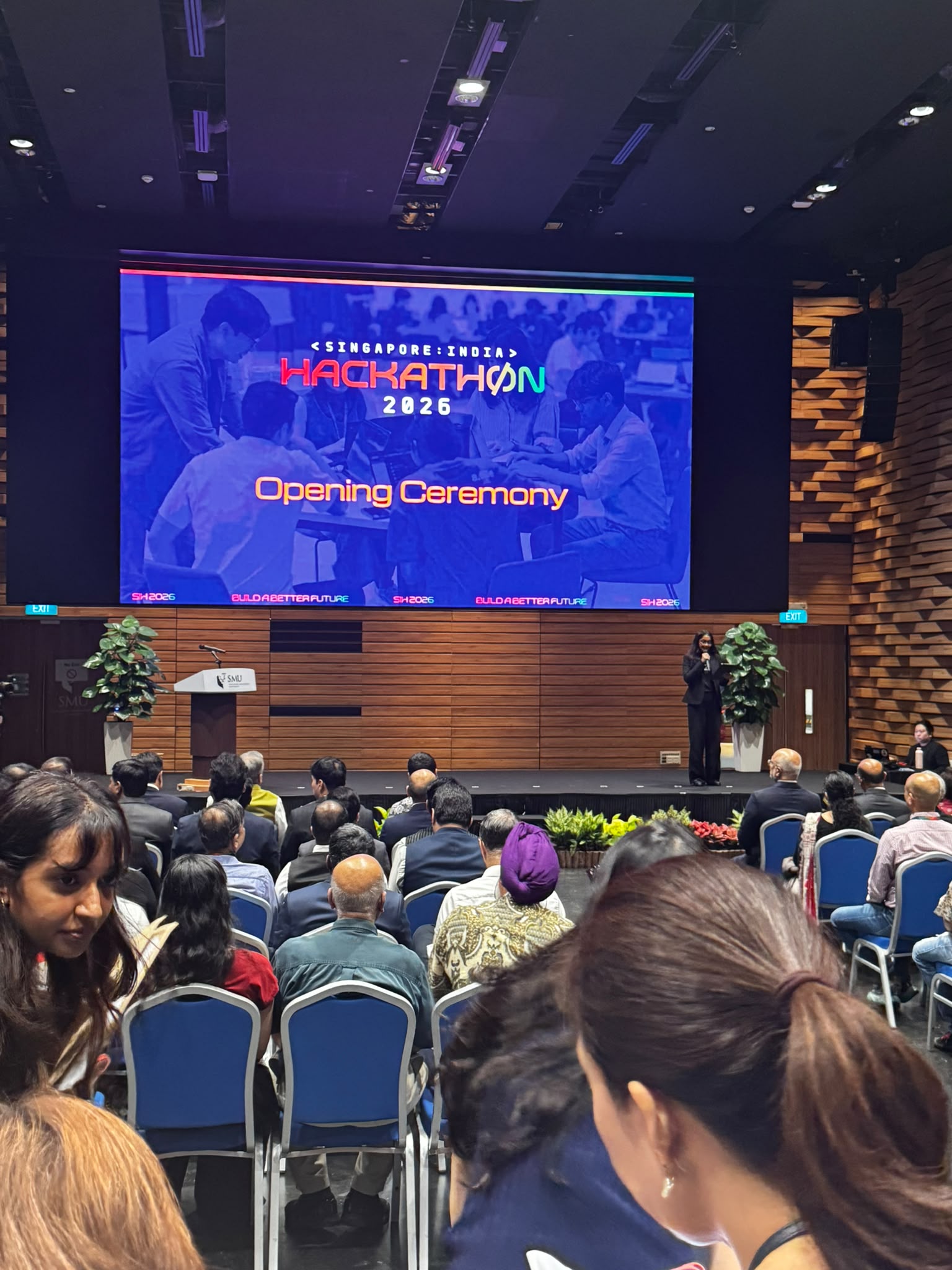
Held at SMU, with its opening ceremony at the Yong Pung How School of Law, this year's edition brings together senior government representatives, university leadership, industry leaders, entrepreneurs and young innovators. It is a well-structured initiative that demonstrates how education, industry and international collaboration can come together to nurture the next generation of problem-solvers.
How did the Singapore–India Hackathon begin?
The initiative traces its origins to 2018, when Indian Prime Minister Narendra Modi, during an official visit to Singapore, proposed a joint hackathon to then Singapore Prime Minister Lee Hsien Loong. The idea was to bring together the young talent of both countries and provide them with a platform to demonstrate their creativity, technical capabilities and entrepreneurial thinking.
The proposal was welcomed by Singapore, with Nanyang Technological University (NTU) and its innovation arm NTUitive taking responsibility for the Singapore side, while India's All India Council for Technical Education (AICTE) was designated to coordinate the initiative.
The first edition was held at NTU Singapore in November 2018, around the theme of Smart Campus. Twenty teams, comprising students from both countries, participated in a 36-hour challenge to develop innovative solutions for improving campus experiences.
The second edition followed in September 2019 at the Indian Institute of Technology (IIT) Madras in Chennai. This time, the teams were deliberately mixed, with three Indian and three Singaporean students in each team. The challenges covered healthcare, quality education and affordable, clean energy.
The initiative subsequently resumed in 2023, following the disruption caused by the pandemic. The third edition was held at IIT Gandhinagar in Gujarat, with more than 200 participants collaborating on challenges involving fintech, sustainability and environmental, social and governance issues.
The fourth edition has now brought the initiative back to Singapore, with SMU taking the lead as the coordinating university.
Over the years, the hackathon has grown from a competition focused on technical innovation into a broader platform connecting universities, entrepreneurs, businesses and the innovation ecosystems of both countries.
A distinguished gathering of leaders and innovators
The opening of the fourth edition reflects the importance both countries attach to this initiative.
The Singapore delegation was represented by Mr Desmond Lee, Singapore's Minister for Education, while India was represented by Mr Pralhad Joshi, Union Minister of Education, who also oversees Consumer Affairs, Food and Public Distribution, and New and Renewable Energy.
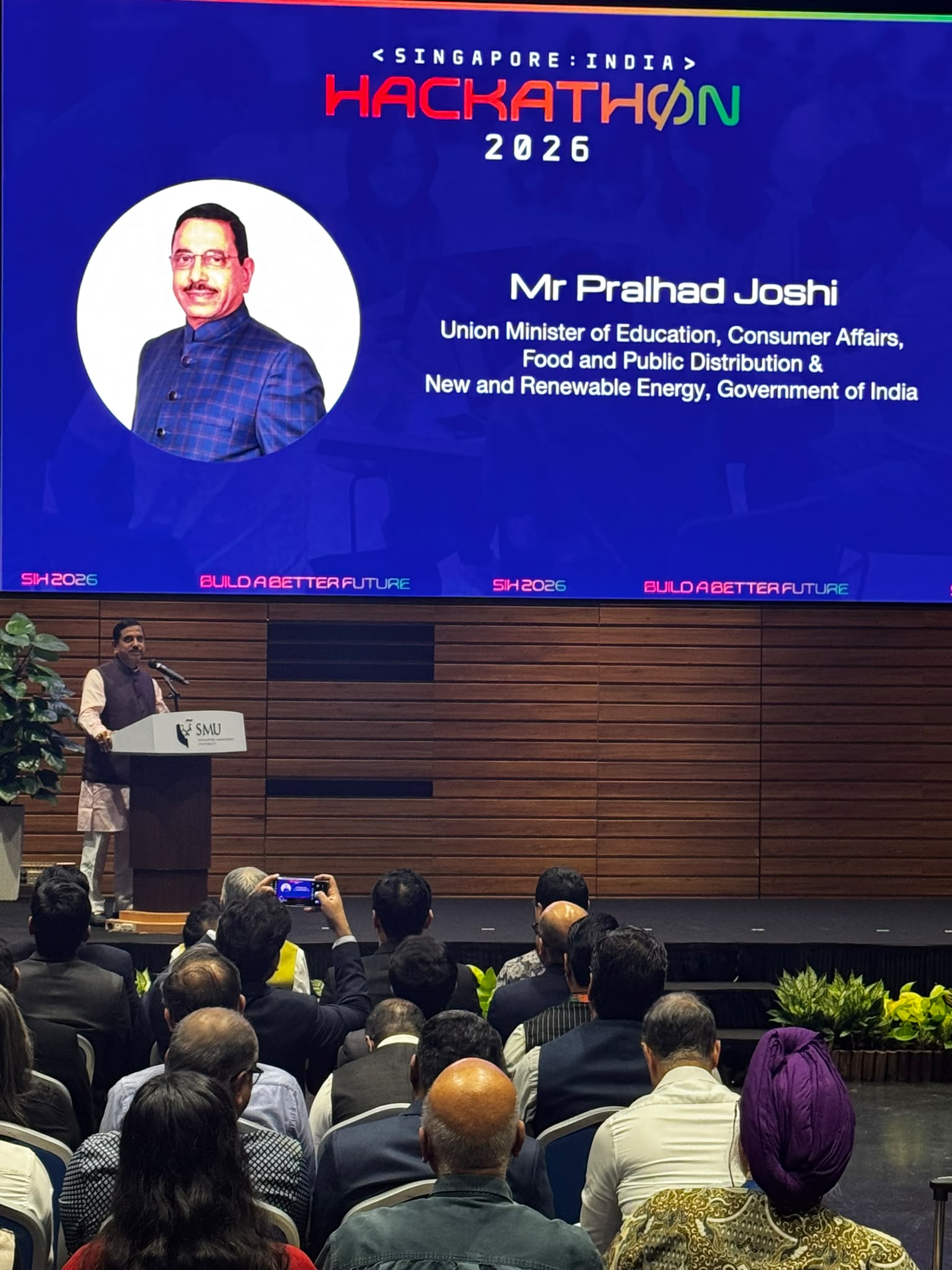
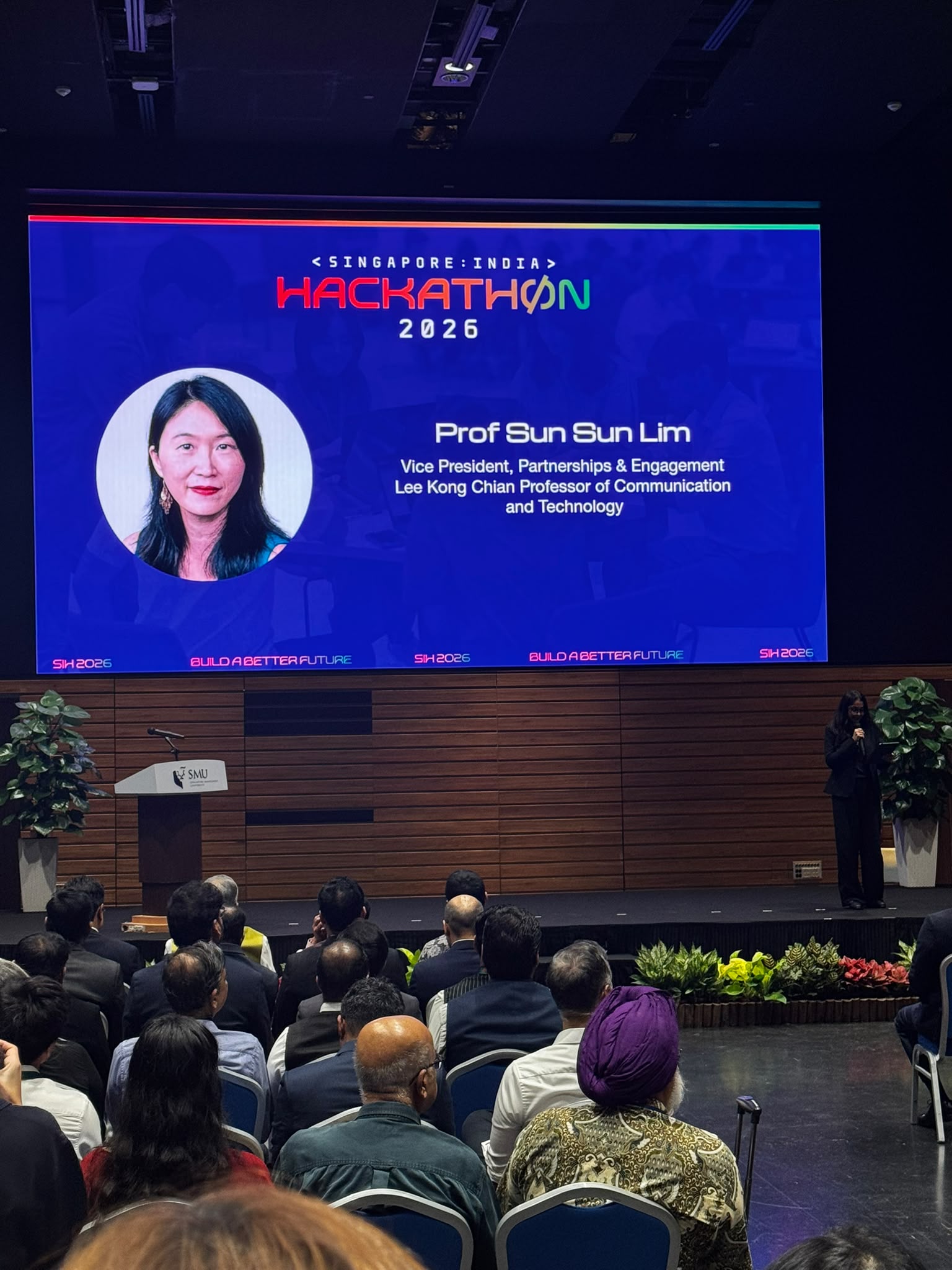
Other key representatives included Dr Shilpak Ambule, India's High Commissioner to Singapore; Professor Lim Sun Sun, SMU's Vice President for Partnerships and Engagement; Mr Piyush Gupta, Chairman of SMU; and Professor Yogesh Singh, Chairman of AICTE.
The event also brought together representatives from India's Ministry of Education, AICTE, Singapore's Ministry of Education, the High Commission of India and the university community.
The judging panel and mentors bring considerable experience from the corporate, technology, investment and entrepreneurial worlds.
Among the judges are Madhabi Puri Buch, former Chairperson of the Securities and Exchange Board of India; Ravi Arora, Senior Vice President and Head of Group Innovation at Tata Sons; Dr Josephine Kwa Lay Keng of Sembcorp Industries; Anju Patwardhan of H2O.ai; and academics and technology leaders from SMU and the wider industry.
The mentors include entrepreneurs and business leaders such as James Chan of TVS Motor, Tiger Fang of Kargo Technologies, Calvin Tan of Pints AI, Prateek Manocha of Ailytics, Hero Choudhary of Beenext and Abhishek Chatterjee of Tookitaki.
Having access to people who have built businesses, led technology initiatives, invested in startups or managed large organisations gives students an opportunity to receive feedback that extends well beyond the classroom.
Three days of ideas, experimentation and problem-solving
The theme for the 2026 edition is Build a Better Future.
Around 120 students from Singapore and India, including participants from Singapore Management University, the National University of Singapore, Nanyang Technological University and more than 50 Indian higher education institutions, have been brought together in 20 mixed-country teams.
The teams are working across four industry tracks:
- FinTech and InsurTech: Exploring financial innovation, accessibility and new approaches to insurance and financial services.
- Sustainability and Climate: Developing solutions to environmental challenges and supporting more sustainable communities and businesses.
- Emerging Technologies: Exploring the possibilities of artificial intelligence and other technologies to address complex problems.
- Social Innovation and Inclusive Development: Finding ways to use innovation to improve accessibility, inclusion and quality of life.
Participants are equipped with AI tools and supported through workshops, mentoring and structured problem-solving sessions. The programme includes 36 hours of building, refining and pitching ideas, culminating in the final presentations.
The total prize pool is S$88,000, but the value of the experience extends well beyond the financial rewards. Teams also have access to potential internships, industry engagement, funding pathways and incubation support through SMU's Institute of Innovation and Entrepreneurship.
The 2023 edition offers encouraging examples. Singapore-based biotech startup Anomaly Bio and enterprise AI startup Pints AI went on to raise funding after participating in the earlier hackathon. Such outcomes demonstrate the potential of these platforms to become starting points for ventures that continue to develop long after the event.
The Bahadur family's contribution: Turning a competition into a longer-term opportunity
One of the most meaningful developments in this year's edition is the establishment of the Nupur A. & Amrish Bahadur Scholarship.
The scholarship has been established by Nupur Agarwala Bahadur and Amrish Bahadur, patrons and supporters of the Singapore–India Hackathon.
The initiative will support four outstanding participants in pursuing postgraduate studies at SMU in areas including:
- Master of IT in Business
- Master of Science in Business AI
- Master of Science in Innovation
Importantly, the scholarship is open to participants of the current edition as well as the previous two editions, irrespective of nationality.
This is a significant contribution because it creates continuity between the hackathon and higher education. Students who demonstrate exceptional potential through the competition can now have an opportunity to further develop their knowledge and capabilities at SMU.
The scholarship is therefore more than financial assistance. It is an investment in young people who have demonstrated curiosity, initiative and the ability to work towards solutions.
Beyond technology: The value of cultural exchange and international exposure
A hackathon of this nature offers something that cannot easily be replicated through conventional academic programmes: the opportunity to work closely with people who approach problems differently.
Indian students bring exposure to a large and diverse market, strong engineering capabilities and experience with challenges involving scale, affordability and accessibility. Singaporean students bring perspectives shaped by a highly connected international economy, a strong innovation ecosystem and close engagement with businesses and global markets.
When students from these backgrounds work together, they are exposed to different ways of thinking.
They also learn to communicate across cultural differences, manage disagreements, divide responsibilities and make decisions under pressure. These are important capabilities in today's workplace, where businesses increasingly operate across borders and teams are often geographically distributed.
For Indian students, spending time in Singapore provides exposure to an international business and technology hub. For Singaporean students, interacting with peers from India offers insights into one of the world's largest and most dynamic markets.
The friendships and professional relationships developed during such programmes can continue well beyond the three-day event.
SMU's growing engagement with India's universities
The hackathon also fits into SMU's broader efforts to strengthen its academic and institutional relationships with India.
SMU's engagement with Indian institutions did not begin with this competition. The university has been building relationships with Indian educational institutions for more than a decade, including collaborations with the Indian Institute of Management Bangalore, IIT Kanpur, IIM Rohtak, the Indian School of Business and other institutions.
These relationships have covered areas such as research, faculty collaboration, student mobility, executive education and entrepreneurship.
More recently, SMU and the Indian Institute of Management Ahmedabad have embarked on a five-year collaboration to develop professional and continuing education programmes in FinTech. The institutions are also exploring joint work in financial innovation, digital transformation and research.
SMU has also established a presence in the wider Indian academic ecosystem through its international partnerships and engagement initiatives.
The significance of these relationships is that they create opportunities for universities to work together beyond one-off events. They can facilitate student exchanges, joint research, faculty interaction, academic programmes and closer connections with industry.
The Singapore–India Hackathon provides a practical platform through which these institutional relationships can be experienced directly by students.
How India's National Education Policy is supporting international collaboration
India's National Education Policy (NEP) 2020 has placed considerable emphasis on transforming the country's higher education system through multidisciplinary learning, internationalization, research and experiential education.
The policy recognizes that education must go beyond memorizing information. Students need to develop critical thinking, creativity, problem-solving abilities and the capacity to apply knowledge in changing environments.
This philosophy is closely aligned with the objectives of the Singapore–India Hackathon.
NEP 2020 also explicitly encourages collaboration between Indian and international universities, including research partnerships and student and faculty exchanges.
These developments provide a more supportive framework for Indian universities seeking international academic partnerships.
The result can be mutually beneficial: stronger universities, more internationally exposed graduates and closer connections between the two countries.
Sources and further reading
Key sources for DesiNewz:
- SMU Institute of Innovation and Entrepreneurship – Singapore–India Hackathon 2026 – official programme, judges, mentors, patrons and themes.
- SMU announcement – Fourth edition and programme details – history, organisers, student participation and industry opportunities.
- Lianhe Zaobao – Opening ceremony and Bahadur scholarship announcement – scholarship details, four recipients, participating universities and ministerial remarks.
- NTU – History of the third edition – origins and 2023 edition.
- Government of India – 2019 hackathon announcement – first and second editions.
- India's National Education Policy 2020.
- UGC – Academic collaboration regulations, 2022.
- SMU – Global academic partnerships and India engagement.
Where to verify: This article is general editorial information, not legal, immigration, medical or financial advice. Requirements can change. Check the relevant Singapore government agency or a qualified professional for advice about your situation.