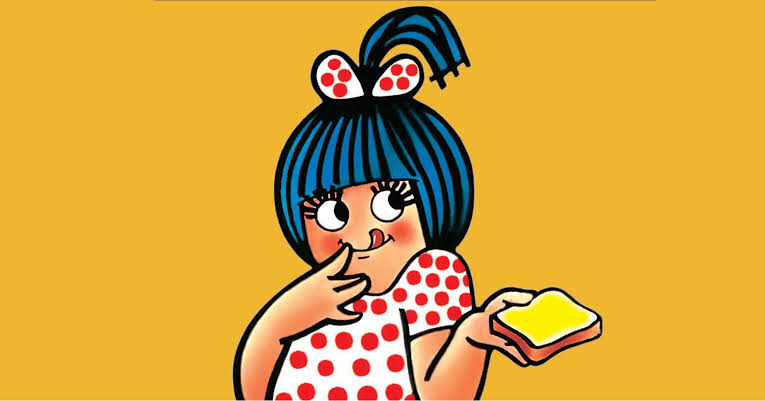
Amul Girl, Amul Butter, India
Sometimes, the best marketing is simply about making people feel something.
I watched Coca-Cola’s new holiday campaign, Enjoy Joy, and found it genuinely warm and welcoming. After two years of experimenting with AI-generated Christmas advertising, Coca-Cola has returned to something beautifully familiar: people, families, shared meals, celebrations and little moments of togetherness.
It got me thinking about where brand marketing is heading. More companies are investing in their own mascots, featuring them in advertising, print campaigns, celebrity endorsements and social media.
Companies want people to recognise, remember and relate to their brands, and eventually develop an emotional attachment to them. In categories where products are similar, services are complicated or a company feels impersonal, a distinctive character can become a competitive advantage.
Why companies invest in mascots
There are five commercial reasons behind the strategy:
- Familiarity and mental availability. Repeated exposure helps consumers recognise a character without needing to read the brand name.
- Emotional connection. People can relate more easily to characters than to corporate identities. Humour, expression, personality and storytelling can make a brand feel approachable.
- Distinctiveness in crowded markets. When products and prices are similar, a recognisable character gives consumers another reason to remember one brand over another.
- A long-term advertising asset. Unlike celebrities, mascots do not change agents, endorse competing products or have unpredictable public controversies.
- Content and commercial opportunities. A mascot can become a social media personality, merchandise line, licensing opportunity, event attraction or entertainment property.
The interesting part is that companies are not necessarily investing in mascots just to sell more products through advertising. They are trying to build an asset that keeps the brand relevant between purchase decisions.
Companies that have made mascots memorable
Compare the Market: Aleksandr the Meerkat
The problem: Insurance comparison was a low-interest, highly competitive category, and the company struggled to stand out against competitors with bigger advertising budgets.
The idea: Create a fictional meerkat who humorously confuses Compare the Market with Compare the Meerkat.
The result: Marketing Week’s 2024 analysis says Compare the Market went from fourth in its category to the UK’s number-one motor insurance comparison website. GlobalData’s 2022 survey put its market share at 54.5%.
Why it worked: The character made a boring category entertaining and, cleverly, helped people remember the company’s actual name.
Duolingo: Duo the Owl
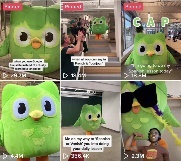
The problem: Language learning requires daily engagement. Users can lose motivation and abandon their lessons.
The idea: Give the brand a personality through Duo, the green owl who constantly reminds users to complete their lessons.
The result: The article’s cited coverage says Duolingo’s social following grew from around 50,000 to more than 16 million on TikTok. Its 2025 TikTok campaign in Germany generated 34.8 million impressions and a 12.63% engagement rate. Duolingo’s 2026 annual reporting describes brand building and entertaining social content as investments that support organic user acquisition and long-term growth.
Why it worked: Duo became entertainment in his own right. People began following the character even if they were not actively using the app.
GEICO: The Gecko
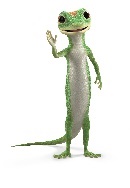
The problem: Insurance is a functional product, and consumers can struggle to distinguish between providers.
The idea: A friendly gecko with a British accent became the recognisable face of the company.
Why it worked: Introduced in 1999, the character made an impersonal insurance company more approachable and gave the brand a consistent advertising identity. The Gecko became one of the most recognisable advertising mascots in America—a distinctive asset, not just a one-off gimmick.
Michelin: Bibendum, the Michelin Man
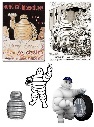
The problem: Tyres are not an emotionally exciting purchase.
The idea: Turn a stack of tyres into a friendly, human-like character.
Why it worked: Introduced in 1898, Bibendum made an industrial product more approachable and helped establish a recognisable identity across generations and markets. The mascot has outlived individual campaigns, products and marketing trends.
Pillsbury: Poppin’ Fresh, the Doughboy
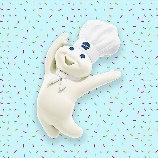
The problem: Baking ingredients and packaged dough are everyday grocery products.
The idea: Create a soft, cheerful character associated with the joy of baking.
Why it worked: Poppin’ Fresh has been part of the brand’s identity since 1965. The character represents warmth, family, baking traditions and nostalgia, giving an ordinary grocery purchase an emotional context. The article’s cited Wall Street Journal reporting also notes that the character’s return coincided with an increase in seasonal baking sales.
Sanrio: Hello Kitty and a character universe
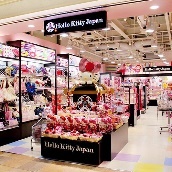
The idea: Build characters that people can form attachments to, collect, gift and incorporate into everyday life.
The result: Hello Kitty became a global licensing and merchandising phenomenon, and Sanrio expanded into a portfolio of more than 450 characters.
Why it worked: This goes well beyond advertising. Characters can become intellectual property that generates revenue through merchandise, licensing, collaborations, retail and entertainment. Sanrio’s 2026 annual report describes diversifying its character portfolio and building customer relationships across generations.
Amul: The Amul Girl
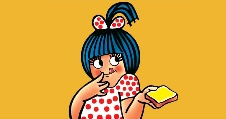
The problem: Amul needed to make its butter brand stand out in a competitive market and build an emotional connection with Indian households.
The idea: In 1966, Sylvester daCunha and art director Eustace Fernandes created the Amul Girl—a cheerful, mischievous little girl in a red polka-dot dress, paired with the line “Utterly Butterly Delicious”.
The result: What began as a mascot for Amul butter evolved into one of India’s most recognisable advertising icons. The Amul Girl became the face of topical advertisements, commenting on current affairs, cricket, politics, cinema and popular culture with humour and clever wordplay.
Why it worked: Amul did not just use its mascot to sell butter. It gave her a personality and a voice. By making her part of everyday conversations, the brand stayed culturally relevant across generations. The character became more than an advertising device—she became part of India’s popular culture.
Why brands are investing in mascots now
Brands want to become entertainment properties
Duolingo is perhaps the clearest example. People watch Duo’s videos, share memes and participate in the character’s story. The brand does not have to interrupt entertainment with an advertisement; the brand itself becomes entertainment.
Technology companies want to look less intimidating
This is especially interesting in the AI era. Microsoft introduced Mico, an expressive avatar for Copilot, while Apple has had its own unofficially named Little Finder Guy appearing in social content. Technology companies can appear powerful, complex and impersonal. A friendly character can make the experience feel more approachable.
Brands want a character they own and control
Celebrity partnerships are expensive and come with reputational risks. A brand-owned character can be developed, adapted and used consistently across advertising, social media, events and collaborations.
Social media rewards recurring characters
A mascot provides continuity. Instead of inventing a new campaign personality every few months, a company can build an ongoing narrative. Crocs’ Niles, for example, is being developed as a sitcom-style character with a personality, flaws and ambitions. Crocs wants to extend him into social content, entertainment, experiences and future brand extensions. This is an explicit long-term intellectual property investment, not just a seasonal campaign.
Does research support mascot marketing?
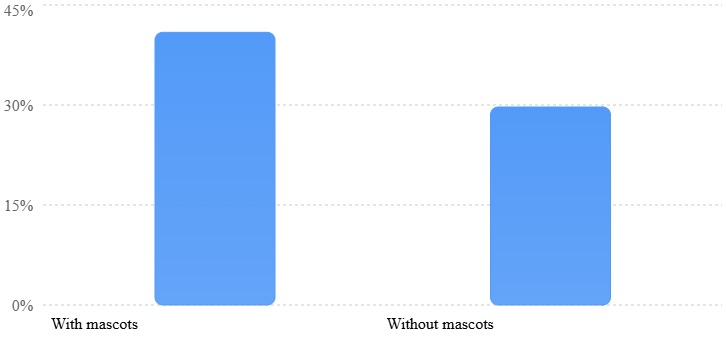
There is some interesting evidence. A 2019 analysis by System1, using long-term campaigns in the IPA Databank, found an association between campaigns using mascots and very large market-share gains.
| Approach | What it can achieve |
|---|---|
| A mascot | Gives the brand a recognisable face. |
| A brand character | Gives the brand a personality and a story. |
| Emotional storytelling | Gives consumers a reason to care about the brand. |
There are two important qualifications. First, this is an association, not proof that introducing a mascot automatically increases market share. Second, consistency matters. Marketing Brew’s September 2026 analysis suggests that developing genuine recognition and emotional attachment to a mascot can take around three years.
So this is not necessarily a quick advertising win. It is a long-term brand-building investment.
A mascot alone does not create brand love
The best campaigns combine a recognisable mascot, a character with personality and a story that gives people a reason to care. But a mascot alone cannot create brand love.
A character can become famous without making the underlying product more desirable. It can generate millions of views without creating meaningful customer loyalty. Sometimes companies become so focused on making the character popular that the character becomes bigger than the brand itself.
That is an interesting risk. People are already surrounded by AI-generated content, automated interactions, digital assistants and increasingly synthetic experiences.
The opportunity is not necessarily to make a brand more human by giving it a mascot. It is to make the brand behave more human.
Sources
- Marketing Week — Why two meerkats made insurance memorable
- Marketing Week — The original campaign strategy
- GlobalData — 2022 survey on the UK motor insurance comparison market
- The Drum — How Duo became a cultural phenomenon
- TikTok — Duolingo campaign results
- Duolingo — Investor filing on brand building and organic user acquisition
- Mascot Hall of Fame — The GEICO Gecko
- Luminous — How brand mascots create emotional connections
- Wall Street Journal — Why brands are investing in cuddly mascots
- Sanrio — Annual Report 2026
- BBC — Big tech bets on new mascots in bid to seem more cuddly
- System1 — Research on long-term advertising campaigns, as reported by Marketing Week
- Marketing Brew — September 2026 analysis of mascot recognition and emotional attachment
- Crocs — Official announcement on Niles