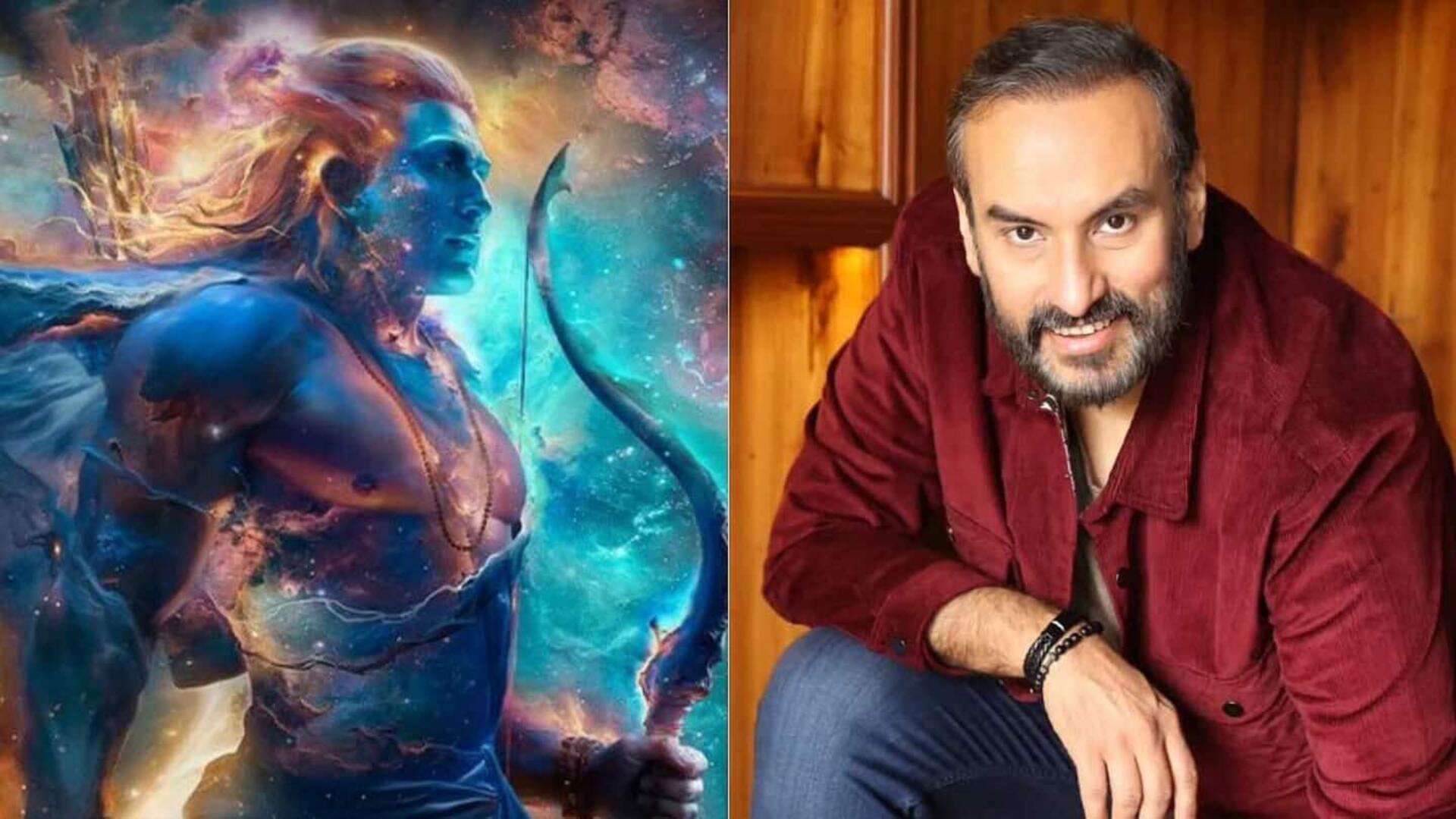
Namit Malhotra, CEO Prime Focus & DNEG
There is something interesting happening around Ramayana, the ambitious cinematic project being produced by Namit Malhotra. Beyond the film itself, its scale, the VFX discussions and the expectations surrounding its release, there is a much bigger story that deserves attention.
It is the story of an entrepreneur who wants to take Indian cinema to the world, and whether India's established film industry is ready to embrace someone challenging the way things have traditionally been done.
One cannot help but notice that while the project has attracted enormous attention, there has not been a comparable, collective show of public support from many of Bollywood's established stars, filmmakers and production houses.
There are also concerns about the volume of negative online commentary, including what some audiences perceive as coordinated attempts to discredit the film through misleading reviews and particularly unpleasant remarks. The consistency of some of this commentary raises questions about whether everything we see online is genuine audience feedback.
And that brings us to an interesting question: why?
We may not know the personal reasons behind individual people's silence, but these are questions worth exploring.
From a small business to a global ambition
Namit Malhotra is not an overnight entrant into the entertainment business.
His entrepreneurial journey began with a modest computer graphics and video-editing venture. He went on to build Prime Focus into an international business and became associated with DNEG, one of the world's leading visual effects companies.
DNEG has contributed to internationally acclaimed films, including Inception, Interstellar and Dune, and has won multiple Academy Awards for its work.
Namit has spent years building expertise and relationships in the international film industry.
But instead of limiting himself to supplying technology and visual effects to global productions, he has a much bigger ambition: to create Indian cinematic properties that can stand alongside the world's biggest productions.
That is what makes Ramayana particularly interesting.
The two-part production, backed by Prime Focus Studios in collaboration with Yash's Monster Mind Creations, brings together Ranbir Kapoor, Sai Pallavi and Yash, along with an international creative and technical team, including music composers Hans Zimmer and A.R. Rahman.
With a reported combined investment of approximately ₹4,000 crore, it is an extraordinary undertaking by Indian film-industry standards.
This is not just another big-budget Hindi film. It is an attempt to bring an Indian epic to a global theatrical audience. Read the full review - Ramayana
Is Namit challenging the established Bollywood business model?
I believe this is where the real story lies.
For decades, Bollywood's business ecosystem has revolved around established production houses, powerful actors, directors, financiers, distributors and industry relationships.
There is nothing inherently wrong with this model. It has produced some of India's biggest stars, successful films and internationally recognised entertainment businesses.
However, industries can become comfortable with established structures. This is precisely where entrepreneurs like Namit Malhotra can introduce disruption.
Consider what he is attempting to do.
Moving beyond the traditional star-driven model
Historically, much of the commercial Hindi film business has revolved around star power. A recognisable actor, an established director, a production house and a strong distribution network have often been the foundations of a big commercial release.
Namit's proposition is different.
He is attempting to make production scale, technology, storytelling and intellectual property equally important.
If this model succeeds, the industry may have to rethink how it builds large cinematic projects. The question will no longer be just which superstar is leading the film, but also who owns the vision, the production capabilities and the franchise.
Building global capabilities rather than depending on global studios
India has some of the world's finest technicians, visual artists, musicians, actors and storytellers.
Yet, much of India's technical talent has historically contributed to international productions where the intellectual property and commercial ownership belong to someone else.
Namit's experience through DNEG gives him an unusual advantage. He understands the global production ecosystem and wants to use those capabilities to tell Indian stories.
The ambition is to move beyond being a supplier of talent and technical services and become a creator and owner of globally recognized entertainment properties.
Challenging traditional production economics
A project of this scale requires a different approach to capital, production planning, technology, international collaboration and distribution.
It also carries enormous financial risk.
If Ramayana succeeds, it could encourage other entrepreneurs and investors to consider large-scale Indian cinematic projects that were previously considered too ambitious. It could also make established production houses reconsider their investment strategies.
Creating franchises rather than just producing individual films
The global entertainment business has demonstrated the value of building intellectual properties that can sustain audiences across multiple films, formats and markets.
Disney, Warner Bros. and other international studios have built powerful businesses around intellectual property.
India has stories equally rich in character, mythology, history and cultural significance. The opportunity is to develop these stories with the same long-term thinking, production discipline and global ambition.
Ramayana is an attempt in that direction.
Why might some Bollywood stars and industry leaders be hesitant to support him?
This is perhaps the most interesting question.
There could be several reasons why established industry personalities are not rushing to publicly endorse his vision.
Success could create a new centre of power
The Hindi film industry has traditionally had a relatively concentrated ecosystem of influential production houses, actors and business relationships.
Imagine an independent entrepreneur entering this ecosystem with international capabilities, access to global talent, a powerful technology business and the ambition to build large-scale franchises.
If successful, he could attract investors, actors, directors and commercial partners who might otherwise work with established studios.
This does not mean anyone is actively opposing him. But a successful new entrant can inevitably change the competitive landscape, and established businesses everywhere tend to watch new competitors carefully.
The industry may be more comfortable with familiar power structures
Bollywood has always been a relationship-driven business.
Established production houses have spent decades building relationships with stars, directors, financiers and distributors.
An entrepreneur approaching filmmaking through a different business model may not automatically become part of these established circles. Industries can also be slow to embrace unfamiliar ways of working.
Perhaps this is one reason why a new business model does not always receive immediate acceptance.
Yash's support sends an important message
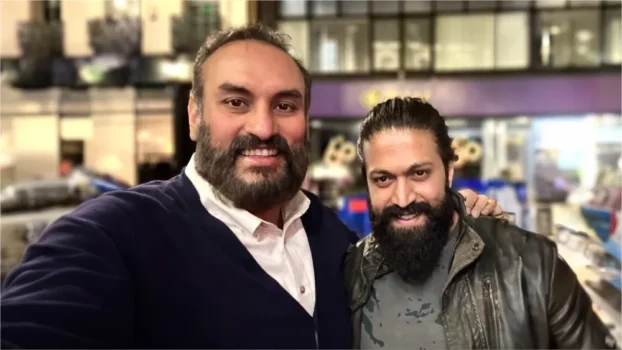
One of the strongest public endorsements of Namit Malhotra came from Yash, who plays Ravana and is also a producing partner in Ramayana.
At the Hyderabad promotional event on October 19, 2026, Yash urged audiences to look beyond minor VFX imperfections and support Namit's larger vision of taking Indian cinema to the world. He emphasized that India needs people willing to take such ambitious risks.
Having experienced the pan-India success of KGF, Yash understands what Indian storytelling can achieve when backed by ambition and conviction.
His support sends an important message: this is not just about one film or one industry. It is about bringing India's diverse film industries together to create cinema that can compete globally.
More power to Namit Malhotra
There is no guarantee that Ramayana will succeed commercially. Its storytelling, visual effects and box-office performance will ultimately be judged by audiences, and rightly so. Taking risks does not make a project immune to criticism.
But we must separate criticism of a film from appreciation of the entrepreneurial ambition behind it.
Namit Malhotra has built an international business and is now bringing that experience and capability into Indian storytelling. That deserves recognition.
India does not need fewer successful Bollywood production houses. It needs more businesses willing to take Indian cinema to the world. Those willing to put their reputation, resources and years of effort behind that ambition deserve encouragement.
More power to entrepreneurs like Namit Malhotra. We need more people willing to think big, take risks and challenge the status quo. Indian cinema will be stronger for it.
Sources
Image Courtesy : NewsBytes