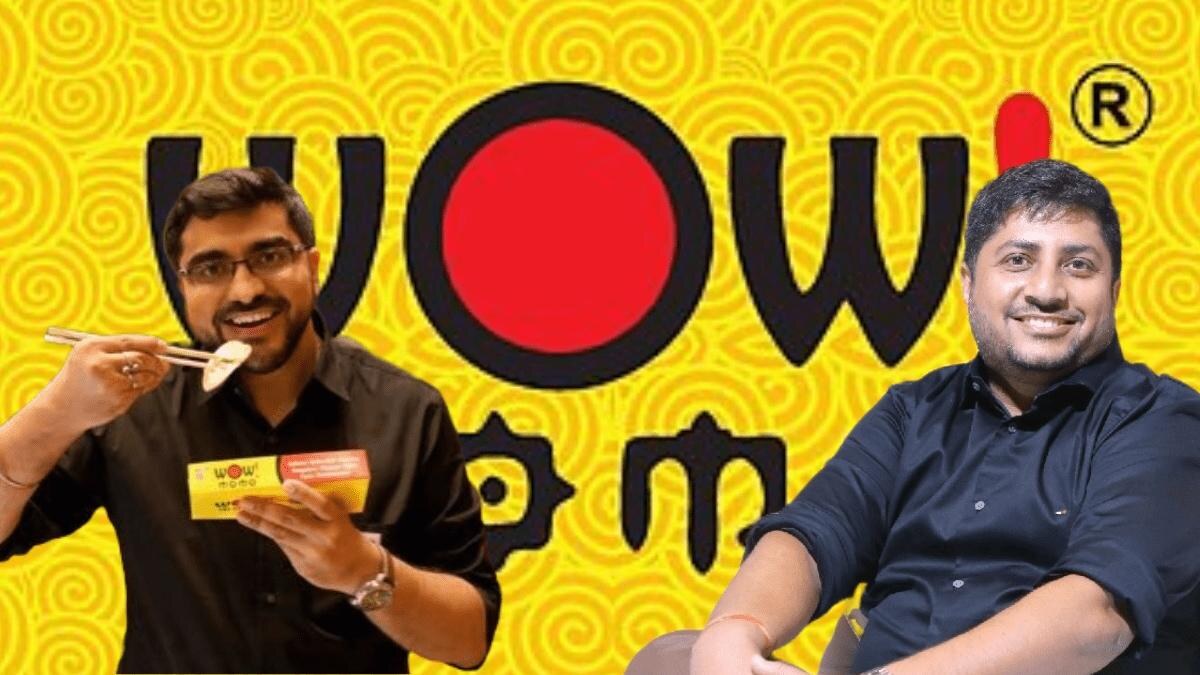
Main photo source: ET Now News. Image supplied in the original article.
Some businesses are born from a technological breakthrough. Others begin with a market gap that nobody has thought to turn into a business.
For WOW! Momo, the opportunity was hiding in plain sight: a popular snack, a loyal following and a simple question — why couldn't momos have their own recognizable food brand, just like burgers and pizzas?
In 2008, two commerce students from Kolkata, Sagar Daryani and Binod Kumar Homagai, decided to find out.
With an initial investment of just ₹30,000, they started selling momos through a small kiosk in the city. They had little capital, limited resources and no guarantee that their idea would work.
Nearly two decades later, WOW! Momo has grown beyond its original restaurant concept into a wider food business spanning restaurants, multiple food brands, frozen products and international distribution. Its packaged-food business has reached markets including Singapore, bringing the brand's products within reach of consumers well beyond India.
But the story of WOW! Momo is not simply about selling more dumplings. It is about recognizing an everyday food as a scalable business opportunity — and then building the systems, brand and distribution needed to take it much further.
Two college friends, one deceptively simple idea


The two were in the final stages of their commerce degrees when they began exploring business ideas. Rather than pursuing the conventional next steps of postgraduate study or a corporate job, they considered whether they could build something of their own.
Their inspiration was not an entirely new food. Momos were already familiar to consumers, particularly in parts of eastern and northeastern India. The opportunity lay in how they were sold.
Burgers had established themselves as a recognizable fast-food category. Pizza had become a scalable restaurant proposition. Yet momos were largely associated with smaller vendors and informal outlets.
As Daryani explained in an account of the early venture, the question was straightforward: if there could be dedicated places selling burgers and pizzas, why couldn't there be places dedicated to momos?
It was a simple question, but it changed how the founders looked at the product.
They were not merely planning to sell a plate of momos. They wanted to create a brand around the food — one that could be recognized, trusted and replicated across locations.
That distinction became central to the business they went on to build.
Starting with ₹30,000 — and doing the work themselves
The first challenge was money.
According to interviews with Daryani, the initial ₹30,000 was borrowed from his father. It was not the kind of capital that could fund an elaborate restaurant, an expensive launch campaign or a large team.
Instead, the founders began small, setting up a kiosk inside a Spencer's retail outlet in Kolkata's Tollygunge area.
They used a modest kitchen, hired a part-time chef and worked with limited resources. Contemporary accounts describe their early setup as little more than a kitchen, a couple of cooks and a table.
The founders were involved in the unglamorous details of running the business.
Daryani focused on attracting customers. He wore a WOW! Momo T-shirt, approached shoppers, distributed leaflets and offered samples.
With little money for traditional marketing, getting people to taste the product became their primary promotional tool.
Homagai, meanwhile, concentrated on the operational side of the business. The founders sourced ingredients, managed preparation and worked to ensure that the momos reached the outlet fresh.
Homagai later recalled that their early sales promotions included a buy-three-get-one-free offer, which helped lift sales by around 45–50% during the promotion period.
There were no guarantees that customers would return. Every sale mattered, and every expense had to be justified.
Daryani's experience of helping in his father's garments business had given him an early exposure to selling and customer interaction. The new venture demanded that he apply those instincts directly, without the safety net of a large marketing budget or an established brand name.
From a food stall to a brand people recognized
The initial kiosk provided the founders with something more valuable than visibility alone: evidence that the concept could work.
Their early performance helped them secure another outlet in a Spencer's store at South City Mall, Kolkata. The move into a prominent mall environment increased their exposure and helped establish WOW! Momo as more than a small food stall.
But expansion was only one part of the equation. The founders also had to make the product distinctive.
They experimented with flavours and cooking styles, moving beyond the basic steamed momo into fried and pan-fried varieties, different fillings and more adventurous combinations.
The business later introduced innovations such as the MoBurg — a burger-style creation built around momos — and dessert-inspired products.
This was an important commercial decision. Rather than treating momos as a single menu item, WOW! Momo began building a broader product category around them.
The strategy addressed two challenges at once.
First, it gave customers more reasons to return. Second, it helped the brand stand apart from informal vendors that might compete primarily on price or location.
That shift is one of the most instructive parts of the story. A product does not always need to be invented from scratch to create a new market opportunity. Sometimes, the opportunity is to improve how an existing product is presented, distributed and experienced.
The less glamorous side of entrepreneurship: cash flow, setbacks and persistence
Growth was not a straight line.
For the founders, one of the biggest challenges was turning an unproven brand into a business that employees, suppliers and retail partners could trust.
Homagai has spoken about the difficulties of securing talent when a company is still relatively unknown, dealing with licensing requirements and learning how to manage underperforming locations.
In 2011, the company's production unit in Jadavpur was shut by the Pollution Control Board because it lacked the required pollution license. The founders temporarily moved operations to another house while they worked to resolve the issue.
It was a disruption that could have derailed a young venture. Instead, they worked through the problem and resumed operations.
Their experience offers a useful reminder that entrepreneurship is rarely just about having a compelling idea. The ability to navigate regulations, manage cash flow, maintain quality and recover from operational setbacks often determines whether a promising concept survives.
The founders also took a deliberately cautious approach to spending in the early years. They reinvested earnings, kept costs under control and built the business incrementally.
External investment came later. In 2015, Indian Angel Network invested ₹10 crore, when WOW! Momo had grown to approximately 44 outlets.
The funding helped the company strengthen its management team and support its next stage of expansion.
Building a business, not just a restaurant chain
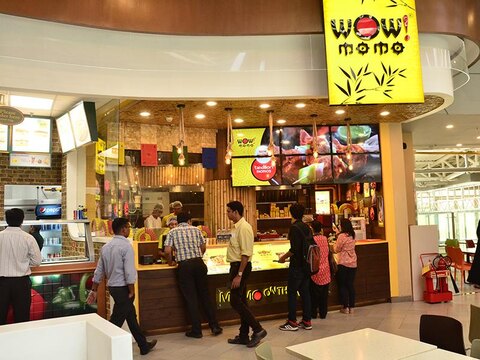
As WOW! Momo expanded beyond Kolkata, the founders faced a different challenge: how could a product prepared in one kitchen be delivered consistently across hundreds of outlets?
The answer required more than opening new locations. It meant building repeatable processes for food preparation, sourcing, training, quality control and distribution.
The company developed a centralised approach to recipes and production, supported by research and development. Over time, it expanded beyond WOW! Momo into other food concepts, including WOW! China, WOW! Chicken and WOW! Kulfi.
The pandemic changed the question: what if customers wanted momos at home?
One of the most consequential developments in the company's journey was its move into packaged foods.
Until then, much of the business revolved around customers visiting an outlet or buying food through restaurant delivery channels. The pandemic disrupted that model and accelerated demand for food that consumers could prepare at home.
In 2021, WOW! Momo entered the fast-moving consumer goods (FMCG) market with frozen, ready-to-prepare momos.
It initially partnered with BigBasket and planned to expand distribution through supermarkets and other retail channels.
The strategic thinking was significant. Instead of requiring customers to visit a restaurant, the brand could enter their kitchens.
A consumer could buy a pack, store it in the freezer and prepare momos when the craving struck.
The product could serve families looking for a convenient snack, young professionals wanting a quick meal or anyone who enjoyed momos but did not have easy access to a nearby outlet.
This was more than adding a new sales channel. It changed the economics and reach of the business.
In a September 2026 interview, WOW! Momo Foods CEO Mithun Appaiah described the work involved in adapting the restaurant experience for retail, including convenient packaging and maintaining temperature control throughout the distribution chain.
From restaurant kitchens to a ₹100-crore packaged-food business
The move into FMCG appears to have become one of WOW! Momo's most important growth opportunities.
In April 2026, Indian Retailer reported that the company's packaged-food business had crossed ₹100 crore in annual recurring revenue, with 100% year-on-year growth.
Its distribution had expanded to more than 450 cities and over 6,000 touchpoints, across modern retail, quick-commerce platforms and other channels.
| Measure | Reported figure |
|---|---|
| Reported annual recurring revenue for packaged foods, April 2026 | ₹100 crore+ |
| Reported year-on-year packaged-food growth | 100% |
| Cities reached through distribution | 450+ |
| Reported distribution touchpoints | 6,000+ |
Source: Indian Retailer, 1 April 2026. Annual recurring revenue is not the same as audited annual revenue.
The portfolio has also moved beyond frozen momos into products such as cup noodles, other packaged foods and frozen snacks.
The company is also pursuing international markets. Reporting in 2026 identified the United Kingdom, Germany, Singapore, Poland, Russia and several Gulf countries among the markets in which its packaged-food business is present.
The opportunity is compelling, but it should not be mistaken for an easy extension of the restaurant model.
Exporting frozen food requires suitable manufacturing, reliable cold-chain distribution, compliance with the destination market's requirements and local retail partners. Growth will depend on getting these details right, not simply on how recognisable the brand is in India.
WOW! Momo in Singapore: from a Kolkata venture to a freezer at Mustafa
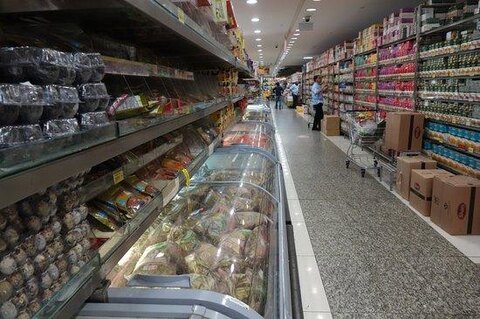
For Singapore residents, this international expansion makes the story more tangible.
Singapore has a diverse food culture, and consumers familiar with Indian snacks can find themselves looking for familiar flavours when preparing meals at home. For people who have lived in India, frozen momos can also offer a convenient reminder of the food they enjoyed there.
WOW! Momo's reported expansion into Singapore's packaged-food market brings that proposition closer to home. Its frozen products are reported to be available in Singapore, and Mustafa Centre is a place shoppers can look for them.
Sources and further reading
The following reports provide useful background on the founders' own accounts, the company's growth and its international packaged-food expansion.
Fortune India — How Sagar Daryani turned street-side momos into a ₹650-crore empire
NDTV Profit — How WOW! Momo grew from one table to 274 stores
Mint — WOW! Momo enters the FMCG segment
Indian Retailer — WOW! Momo FMCG crosses ₹100 crore ARR
Where to verify: This article is general editorial information, not legal, immigration, medical or financial advice. Requirements can change. Check the relevant Singapore government agency or a qualified professional for advice about your situation.