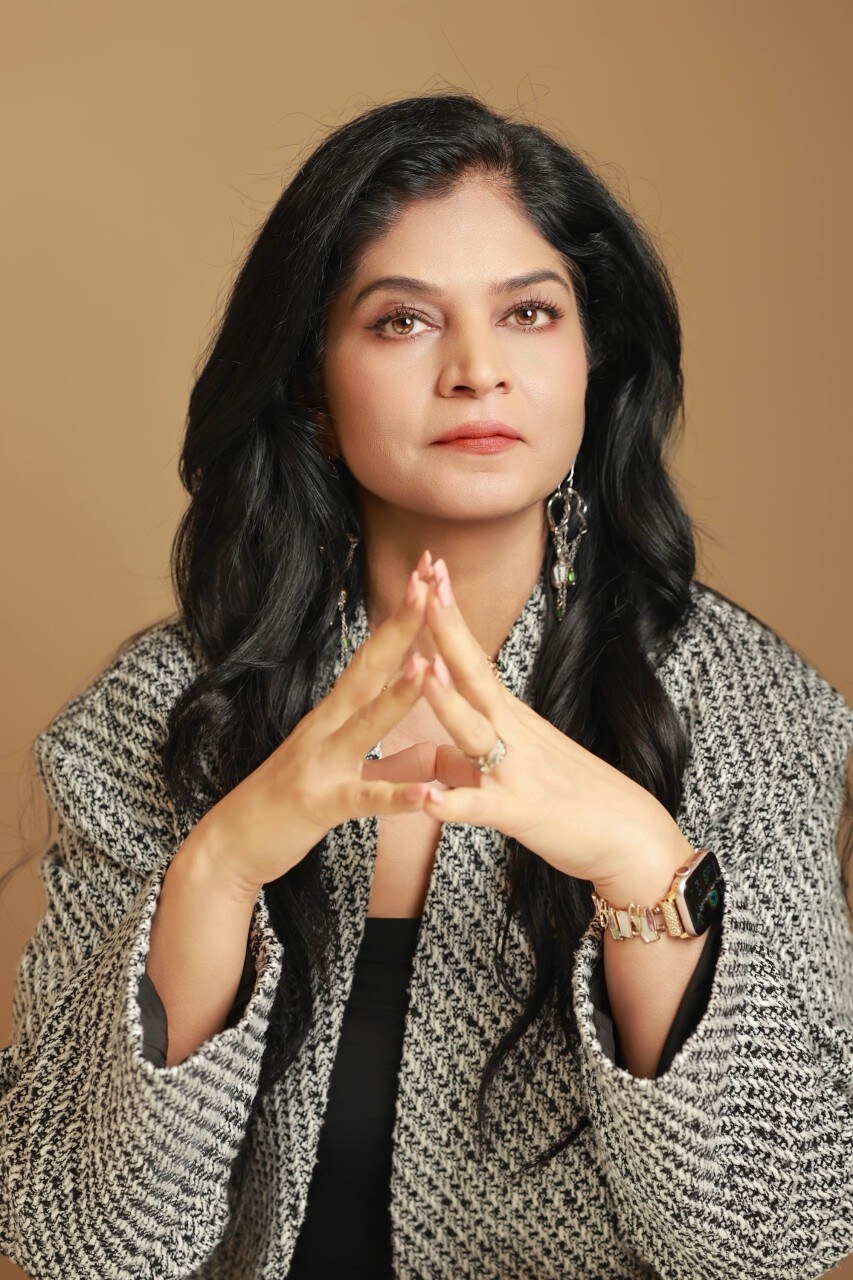
Shalima Motial is the founder and CEO of Dream Catchers Vision, a Singapore-based events, theatre and film production company. Her career has moved through fashion coordination, cabin crew, recruitment, live events and filmmaking—each chapter preparing her for the next.
Question 01Can you take us back to the beginning of your journey? What were you doing before becoming an entrepreneur, and what experiences shaped you?
My journey started in fashion coordination, then took me up in the air as cabin crew in India. There I ran a placement company called Stepping Stones.
Fashion coordination sharpened my eye for aesthetics and presentation—pulling together a vision from a hundred moving pieces, whether that meant fabrics, people or timing. Cabin crew taught me poise under pressure: how to read a room of strangers in seconds and make people feel genuinely cared for, even through the smallest interactions.
Running Stepping Stones meant spending years connecting people to livelihoods. I learned to understand what someone needed, match it to an opportunity and see that connection change a life. It gave me a deep understanding of people, their aspirations and what it takes to open a door for someone. It also gave me my first real taste of building and running something of my own.
None of it felt like entrepreneurship training at the time. Looking back, each chapter quietly built a different muscle—creative instinct from fashion, grace under pressure from cabin crew, and an instinct for people and opportunity from Stepping Stones.
In 2011, I brought those experiences together and founded Dream Catchers in Singapore. What began as a leap of faith grew into a company spanning events, theatre and film. Along the way, I found myself wearing even more hats than expected: producer, writer, model, talk-show host, actor and now keynote speaker.
Question 02What made you decide to start your own business?
More than two decades ago, I moved to Singapore and quickly recognised a gap: there were not enough community-driven platforms where artists could display their singing, dancing and acting talents.
I founded Dream Catchers as a stepping stone for aspiring performers and to support them in their artistic journeys. As the company evolved, our scope expanded to women’s empowerment and entrepreneurship.
That vision led to signature platforms including Runway Mom, spotlighting mothers who balance personal and professional lives; Superstars Singapore, a stage for discovering and honouring performance talent; iVenture, encouraging innovation and entrepreneurial spirit among Singapore-based entrepreneurs; and The Dream Catchers Show, showcasing inspiring stories one dream at a time.
We have also produced films including Dominoes, Caged, Flipside and Soulmates.
Question 03How did you get started and find your first big opportunity?
Early on, we discovered a uniquely talented singer through an online audition. She had never performed on stage before, but the digital platform gave her a voice. Watching her go on to win hearts in live shows affirmed my belief in the transformative power of online talent discovery.
That validation strengthened my commitment to using digital tools for talent discovery and growth before we pivoted to stage events. Our platform is sponsorship-driven, which allows us to sustain the work and provide opportunities to performing artists.
We are now in the third season of The Dream Catchers Show. We have already released 36 stories.
Question 04What were the turning points that changed the direction of the business?
One of the biggest challenges has been navigating rapid changes in the digital landscape while ensuring consistent growth and visibility for our artists and films. Technology and digital marketing keep evolving, so we have to adapt continuously while staying focused on our core mission.
Coming up with newer niche ideas and thinking outside the box have been our saving grace.
During the pandemic, strict restrictions stopped live entertainment events. We quickly diversified into short films. We produced films not only to offer relief and entertainment during a difficult period, but also to shed light on sensitive issues such as depression and domestic violence.
That period reaffirmed the importance of evolving our strategy and using our platform to create meaningful impact, even amid disruption.
Question 05What has been one of the hardest periods in your entrepreneurial journey?
One of the hardest periods has really been a series of pivots rather than one single crisis.
When we first started, people did not understand the online aspect of what Dream Catchers was trying to do. It was ahead of where the market was, and that lack of understanding made it difficult to gain traction. We pivoted away from the online model and into live, on-stage events.
That solved one problem but created another: sponsorship. Without a track record or a recognised name, convincing sponsors to back us was genuinely difficult. We were asking people to bet on something unproven. It took persistence before we built enough credibility for sponsorship to stop being a constant uphill battle.
Just as we found our footing, COVID brought theatre production to a complete stop. Once again, we had to pivot—this time into filmmaking, reinventing what Dream Catchers could be when live audiences were not an option.
The lesson is that resilience is not a single dramatic moment. It is choosing to pivot and keep building, over and over, until the market catches up to your vision.
Question 06What do people not see behind the success?
People see the productions, shows and stage presence, but they do not see the years when none of that was guaranteed.
There were the online model we had to leave behind, the many sponsorship rejections and then the loss of live theatre during COVID. Beyond those business pivots is something more personal: the sheer amount of time entrepreneurship takes.
When a major event is coming up, the work is genuinely around the clock. Even with a team, you are the one who has to own it all from end to end. That takes a toll on your time, energy and presence with family.
On stage, everything looks polished, seamless and effortless. What people do not see is everything happening behind the curtain—or the people at home who share in that sacrifice without receiving the applause.
Question 07What are the biggest lessons you have learned?
Pursue your passion. Align your work with what genuinely excites you. When you follow your passion, work feels energising rather than draining.
Embrace failure as growth. Success does not always come immediately. View setbacks as lessons, stay flexible and be willing to reinvent when the original idea is not working.
Find your rhythm. Spend the first and last 20 to 30 minutes of the day away from screens. Reflect, practise gratitude and reconnect with yourself.
Prioritise self-care. Look after your body and mind through exercise, meditation, yoga or spiritual practice. Do not wait until later to take care of yourself.
Be kind to yourself. Let go of unnecessary self-criticism. Self-compassion makes the journey more enjoyable and challenges less intimidating.
Start now. Each day is an opportunity—act on your dreams and wellbeing today, not someday.
Question 08If you were starting again today, what would you do differently?
Honestly, I would not change much. Every venture taught me something, moved my career forward and gave me beautiful connections that I still value.
If there is one thing I would do differently, it would be to research a little more during the first one or two years before diving in. Not to avoid the venture, but to enter it better informed. That extra groundwork would have saved me money early on.
But the willingness to jump in, try and pivot when something was not working—I would do exactly the same. The lessons came from doing, not from waiting until everything was figured out.
Question 09What does success mean to you today?
My definition has changed drastically. When I started, success meant staying constantly busy—events after events, projects after projects—until no time remained for anything else. Being booked out and never stopping felt like proof that I had made it.
Today, I prioritise my health, wellbeing and time. I only say yes to projects that come from a place of love, not fear. Earlier, scarcity sat beneath everything: if I do not do it, someone else will. Now I believe there is enough sunshine for everyone. We can all survive and thrive, and competition does not need to drive us.
Success today is simple: can I sleep well at night? Am I comfortable? And am I the only person I am actually competing with? If the answer is yes, I already consider that success.
Question 10How can readers connect with you and Dream Catchers?
LinkedIn: https://www.linkedin.com/in/shalima-motial-44aab331
Facebook: https://www.facebook.com/dreamcatchersvision/
Instagram: https://instagram.com/dream_catchers_vision