He arrived in Bombay at 19 with a tiffin box, bedding and barely two words of English. He had no elite education, business degree or influential network. Four decades later, he had built a global natural resources group with listings in London and New York. His journey is a story of spotting opportunities, learning from failure and having the courage to think beyond one's circumstances.
Some journeys begin with a carefully laid-out plan. Others begin with a decision to leave home and see where life takes you. Anil Agarwal's story belongs to the latter.
Born in Patna, Bihar, in 1954, Agarwal grew up in a modest family. His father, Dwarka Prasad Agarwal, ran a small aluminium conductor business, while his mother, Ved, managed the household on limited means. After attending Miller High School, Agarwal joined his father's business but never pursued a university degree or formal business education.
He was curious about business and wanted to build something of his own. At 19, he left Patna for Bombay, carrying little more than a tiffin box and bedding. He could barely speak English and had no established contacts in the city. It was a bold move, but one that would change the course of his life.
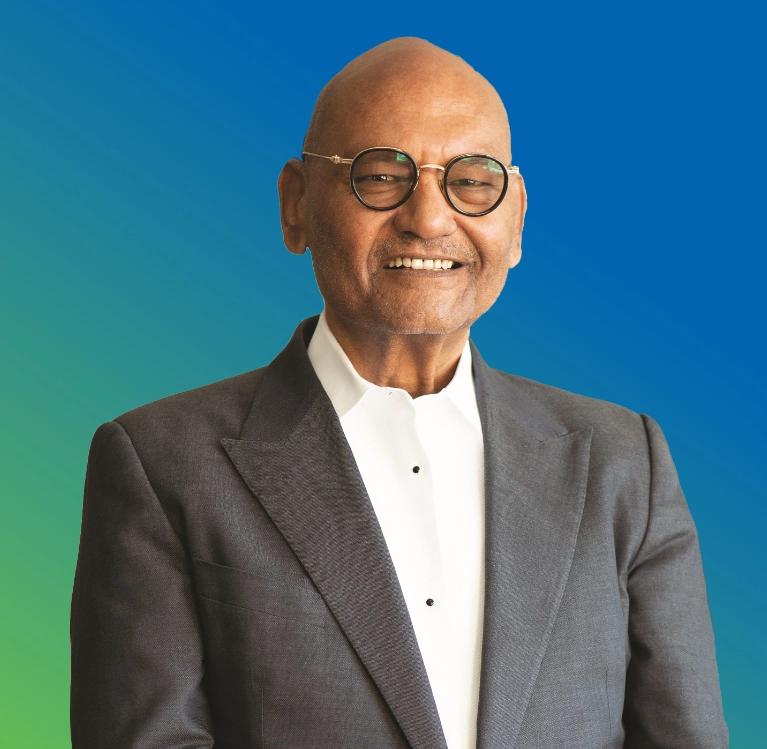
Learning the business, one step at a time
Agarwal began by trading in metal scrap, learning the industry from the ground up. Money was tight, language was a barrier and business did not always go as planned. He tried several ventures, many of which failed because of limited funding, experience or market understanding.
But he kept learning and looking for opportunities. His experience in metal trading helped him recognise the potential in manufacturing. In 1976, he acquired Shamsher Sterling Corporation, a small cable manufacturing business (some company records date the acquisition to 1979). This marked his transition from trading to building an industrial enterprise.
The business evolved into Sterlite Industries, which went public in India in 1988. It was an important turning point: Agarwal was no longer simply buying and selling metals; he was building a manufacturing business with ambitions to grow.
His family played an important role through these uncertain years. His father encouraged him to pursue his ambitions, while his wife, Kiran, stood by him through the difficult times. Within a few years of arriving in Bombay, Agarwal had bought his first small home of around 400 square feet. For someone who had arrived with so little, it was a meaningful sign of how far he had come.
From a small business to a global enterprise
Agarwal's ambitions soon extended beyond cables. He saw an opportunity in India's growing need for metals and minerals to support infrastructure, manufacturing and economic development. Rather than remain in one segment, he began expanding into a wider range of natural resources.
The group made a series of significant moves: investing in Madras Aluminium Company in 1995, commissioning its first privately developed copper smelter in 1997, acquiring a 51% stake in BALCO in 2001 and increasing its holding in Hindustan Zinc to 64.9% by 2003. International expansion followed, with Konkola Copper Mines in Zambia in 2004, Sesa Goa in 2007 and Cairn India in 2011.
Each acquisition brought new opportunities, but also greater operational and financial complexity. The ambition was to build an integrated business spanning metals, mining, oil and gas, and power.
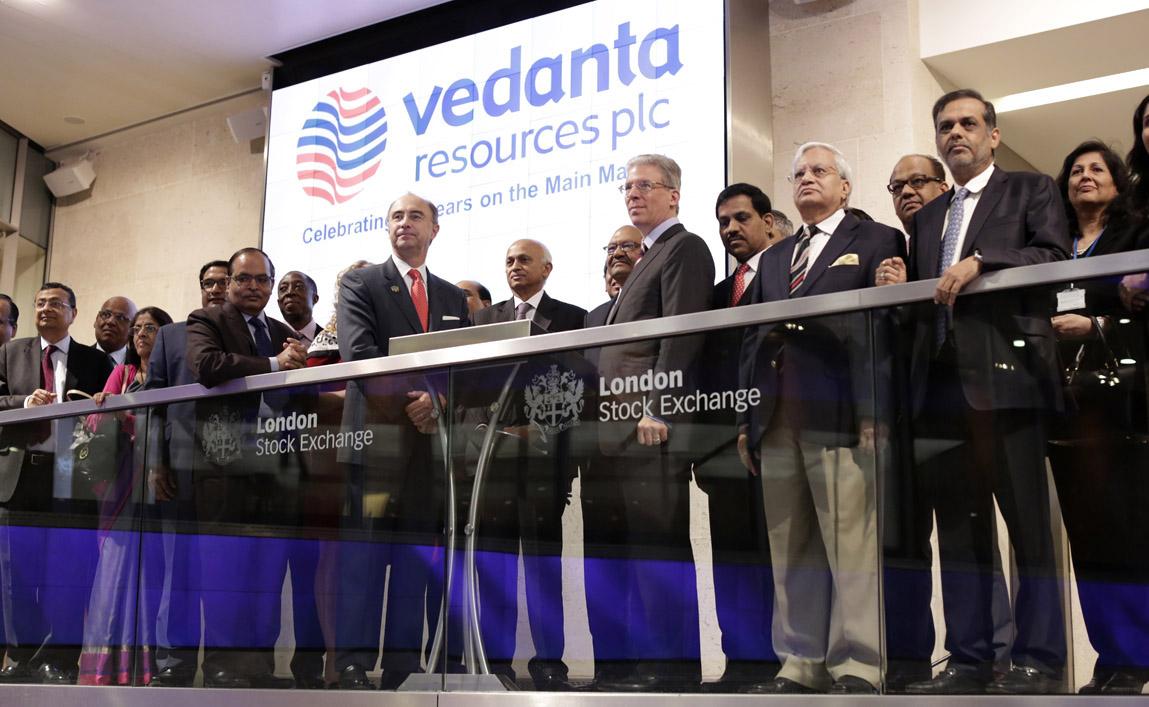
A major milestone came in December 2003, when Vedanta Resources became the first Indian company to list on the London Stock Exchange. The listing opened access to international capital markets and raised the group's global profile. In 2007, Sterlite Industries followed with a listing on the New York Stock Exchange, raising more than US$2 billion.
For the young man who had arrived in Bombay barely speaking English, these were remarkable milestones. His business had moved from a small trading operation to the global financial stage.
The next chapter: Building for India's future
Agarwal's ambitions remain as large as ever. His focus now is on positioning Vedanta for India's next phase of industrial growth, particularly in critical minerals, energy, manufacturing and technology.
The group's recent demerger into five separately listed businesses—covering aluminium, oil and gas, iron and steel, power, and its core natural resources portfolio—is intended to give each business greater focus and room to grow. Agarwal believes each has the potential to become a US$100 billion enterprise.
In October 2026, Vedanta announced plans to invest around US$25 billion over the next three years, largely to expand its aluminium, copper, zinc, oil and gas operations. The group is also pursuing critical mineral exploration and evaluating opportunities in rare earth magnet manufacturing—resources and technologies that will become increasingly important for electric vehicles, renewable energy and advanced manufacturing.
Its plans include expanding renewable energy capacity and exploring a proposed Rs 70,000–80,000 crore investment in West Bengal. Technology is another priority, with AI, automation and data expected to play a greater role in improving productivity, safety and efficiency.
At its 2026 AGM, Agarwal summed up the group's approach through three priorities: Produce More, Partner Better and Purpose Beyond Profit. His larger ambition is to make Vedanta a significant contributor to India's manufacturing and resource capabilities. Whether these ambitious targets are achieved will depend on execution, financial discipline and responsible growth.
Growth comes with responsibility
Vedanta's expansion has also brought scrutiny over debt, environmental practices, worker safety and community impact. The 2018 closure of its Sterlite copper plant in Thoothukudi, following protests, remains a significant and contested chapter in the group's history.
Building a successful business is not just about growth and profits. It also means taking responsibility for workers, communities and the environment. Vedanta's next chapter will depend as much on how responsibly it grows as on how quickly it expands.
What can we learn from his journey?
Agarwal's story offers some valuable lessons for aspiring entrepreneurs. You don't need the perfect start, but you do need the willingness to learn. Build on what you know, recognise opportunities in the markets you understand and don't let early setbacks stop you. Think beyond your immediate surroundings, and value the people who support you along the way.
Ultimately, hard work alone is not enough. You need to understand the market, recognise an opportunity and have the courage to act on it. Agarwal's journey brought together persistence, learning, risk-taking and the willingness to think bigger.
From a young man leaving Patna with a tiffin box and bedding to the chairman of a global natural resources group, his journey has crossed cities, countries and industries. The next few years could be among the most important for Vedanta as it reorganises its businesses and invests in the resources and technologies that will shape the future.
Not every ambition is guaranteed to succeed, and the challenges ahead are considerable. But perhaps the most inspiring part of Agarwal's story is not the size of the business he built. It is that he began without knowing exactly how far he could go.
Sometimes, the first step towards building something extraordinary is simply having the courage to believe that you can attempt something bigger.
Sources for the new section and key updates
Vedanta's FY2026 Chairman's Message outlines the completed demerger, growth priorities, critical-mineral licences and FY2026–27 capital expenditure plans.
Business Standard's 30 October 2026 report covers the proposed US$25 billion investment and the group's growth targets. Company News - Business Standard
ThePrint's 28 October 2026 report explains the proposed West Bengal investment and its feasibility conditions. PTIFeed
Vedanta's 2026 AGM strategy announcement sets out the "Produce More, Partner Better and Purpose Beyond Profit" framework. India’s largest aluminium producer
The earlier life story and historical milestones draw on interviews and company records, including Rediff's 2005 interview, India Today's profile, Vedanta's founder story, and its 2017 bond offering prospectus.