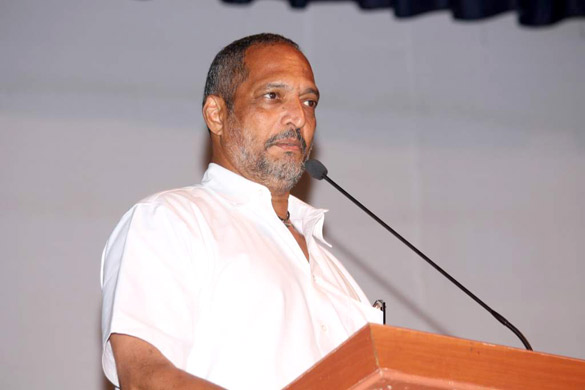
Nana Patekar at a press meet for the Baba Amte film project, 10 July 2012. Photo: Bollywood Hungama. Source · Wikimedia Commons · CC BY 3.0. Original photograph, displayed at a responsive size.
An extraordinary acting career, a reputation for confrontation, a sexual-harassment controversy that divided opinion, and a decade spent helping rural Maharashtra. The life of Nana Patekar was as complex as some of the characters he played.
Nana Patekar was never an easy man to put into a box.
On screen, he could be terrifying. He could deliver a line with such intensity that the audience would sit up, even when he was playing the villain. Off screen, he was known for his bluntness, his temper and his willingness to confront people, including powerful filmmakers and politicians.
Yet, in the later part of his life, he became associated with something very different: helping families devastated by farmer suicides, supporting rural livelihoods and restoring water resources in drought-hit Maharashtra.
In 2018, the actress accused Patekar of sexual harassment during the filming of a song in 2008. He denied the allegation. Mumbai Police subsequently filed a closure report, citing insufficient evidence to substantiate her claim. The controversy became one of the defining episodes of India's #MeToo movement in the film industry.
Nana Patekar died on October 8, 2026, aged 75. His death brought tributes from actors, filmmakers and political leaders, many of whom remembered both his contribution to Indian cinema and his work with farmers. The outpouring of affection also reopened questions about his complicated legacy.
The making of Nana Patekar
Nana Patekar was born Vishwanath Patekar in Maharashtra on January 1, 1951. He grew up far removed from the glamorous world that would eventually become his workplace.
He studied applied art at Mumbai's Sir J. J. Institute of Applied Art and developed his acting through theatre and cinema. He was drawn to characters with difficult emotions, complicated motivations and an uncomfortable edge.
He made his Hindi film debut with Gaman in 1978. During the late 1970s and 1980s, he appeared in films that helped establish him as a serious actor, including Aaj Ki Awaaz, Pratighaat and Trishagni.
It was not an overnight rise. He built his reputation through performance rather than glamour.
The films that made him a formidable actor
1986: Ankush — the arrival of an actor who could command attention
Ankush was an important early film in Patekar's career. It helped establish his presence as an actor who could portray frustration, injustice and anger without relying on the conventional mannerisms of a Bollywood hero.
1989: Parinda — the villain who frightened audiences
If there is one performance that captures the intensity associated with Nana Patekar, it is his portrayal of Anna in Vidhu Vinod Chopra's Parinda.
Anna was violent, unpredictable and deeply unsettling. The performance won him the National Film Award for Best Supporting Actor and a Filmfare Award in the supporting-actor category.
Parinda established him as one of Hindi cinema's most compelling character actors. It also became associated with one of the most famous stories about his temper — a confrontation with director Vidhu Vinod Chopra during the making of the film.
1992–1994: Angaar, Tirangaa and Krantiveer — the rise of a star
Patekar's career entered another phase in the early 1990s.
In Angaar, he won the Filmfare Award for Best Villain. In Tirangaa, he appeared alongside Raaj Kumar in a patriotic action drama. Then came Krantiveer in 1994, in which he played Pratap Narayan Tilak, an angry, idealistic man who challenges corruption and injustice.
The performance won him the National Film Award for Best Actor and the Filmfare Award for Best Actor.
1996: Agni Sakshi — a darker emotional register
In Agni Sakshi, Patekar played a possessive and abusive husband. The performance was disturbing because it portrayed the destructive side of obsession within a domestic relationship.
He received his third National Film Award for this role.
2004–2005: Ab Tak Chhappan and Apaharan — power, violence and moral ambiguity
In Ab Tak Chhappan, Patekar played Sadhu Agashe, a police officer involved in Mumbai's encounter-killing culture.
The character was neither a simple hero nor an uncomplicated villain. He occupied the uncomfortable space where law enforcement, violence, institutional power and personal morality intersect.
In Apaharan, he played a politically powerful and morally complex character, earning another Filmfare Award for Best Villain.
2007: Welcome — the actor who could make people laugh
For a generation of viewers, Patekar was not only the frightening actor from Parinda. He was also Uday Shetty, the gangster in Welcome who wanted to leave the criminal world behind and become respectable.
The comedy worked partly because Patekar played Uday with complete seriousness. He did not abandon his intensity; he redirected it.
His performance alongside Anil Kapoor helped create one of Hindi cinema's memorable comic partnerships. He returned to the role in Welcome Back in 2015.
2010: Raajneeti — a politician's world
In Raajneeti, Patekar played a senior political figure in a drama inspired by power struggles, political ambition and family rivalry.
The role suited an actor who could convey authority without raising his voice constantly.
2016: Natsamrat — the vulnerability beneath the anger
In the Marathi film Natsamrat, Patekar played a retired theatre actor confronting ageing, family conflict, loneliness and the loss of dignity.
This was a different kind of performance from the explosive characters for which he was famous. It demanded vulnerability, emotional restraint and the ability to portray a man whose identity was slowly slipping away.
For viewers who had known him mainly as an intimidating actor, Natsamrat offered a reminder of his range.
His legacy in Marathi cinema was as significant as his place in Hindi films.
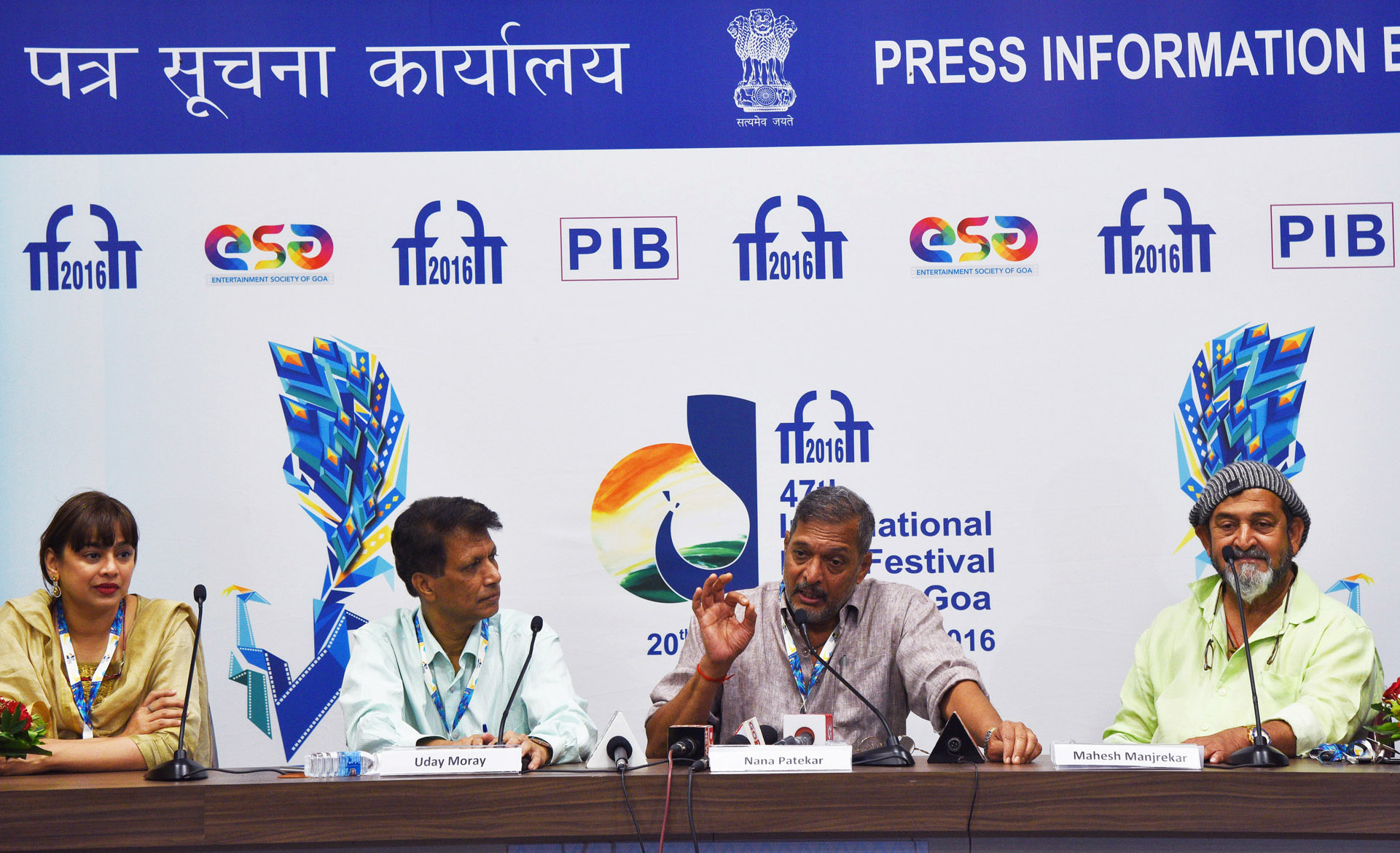
Patekar's achievements included three National Film Awards and the Padma Shri. His filmography ranged from serious dramas and psychologically complex characters to commercial action films and comedy.
But his professional reputation was not built on acting alone. The man behind the camera had his own intensity — and sometimes, that intensity created conflict.
The other Nana: A man who admitted he was difficult to work with
In a 2015 interview with Rediff, while promoting Ab Tak Chhappan 2, he spoke candidly about his temperament and the fights he had experienced during his career.
He joked that almost every film he made involved a fight. He acknowledged that he needed to control himself and admitted to interfering in the work of directors, writers and co-stars. He also said he had sometimes forced colleagues to do things his way.
These were not accusations made by a disgruntled colleague. They were his own admissions.
The Parinda confrontation with Vidhu Vinod Chopra
During the filming of Parinda, Patekar suffered serious burns while filming a scene involving fire. He described the accident in the Rediff interview and recalled how the scene had to be shot again.
He also acknowledged that he had a fight with director Vidhu Vinod Chopra that escalated into a fistfight.
The incident became part of the film's history, even though Parinda went on to become one of the most acclaimed films of Patekar's career.
The most defensible conclusion is that Nana Patekar had a documented reputation for a fiery temperament, and he himself acknowledged behaviour that could make professional relationships difficult.
September 2015: The turning point — Naam Foundation
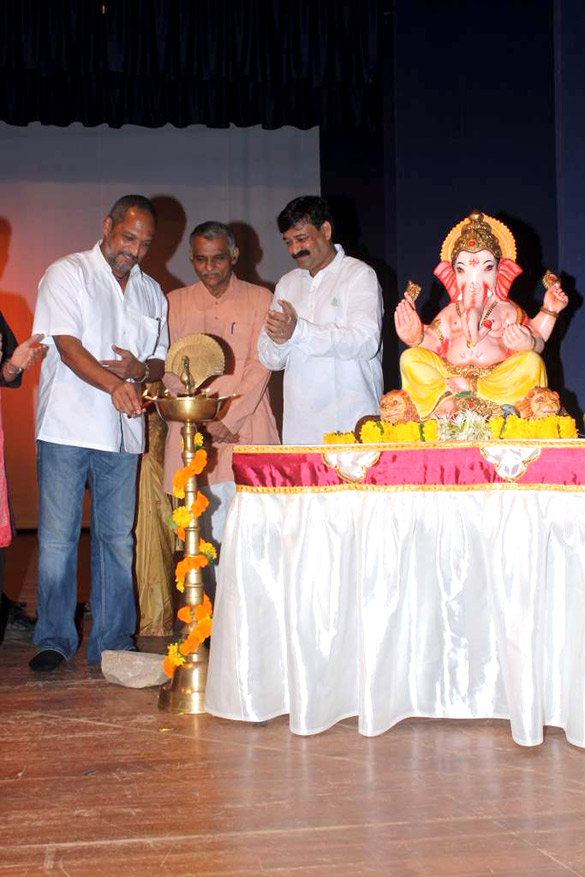
If there is one chapter that gave Nana Patekar's public life a new dimension, it is his involvement with Naam Foundation.
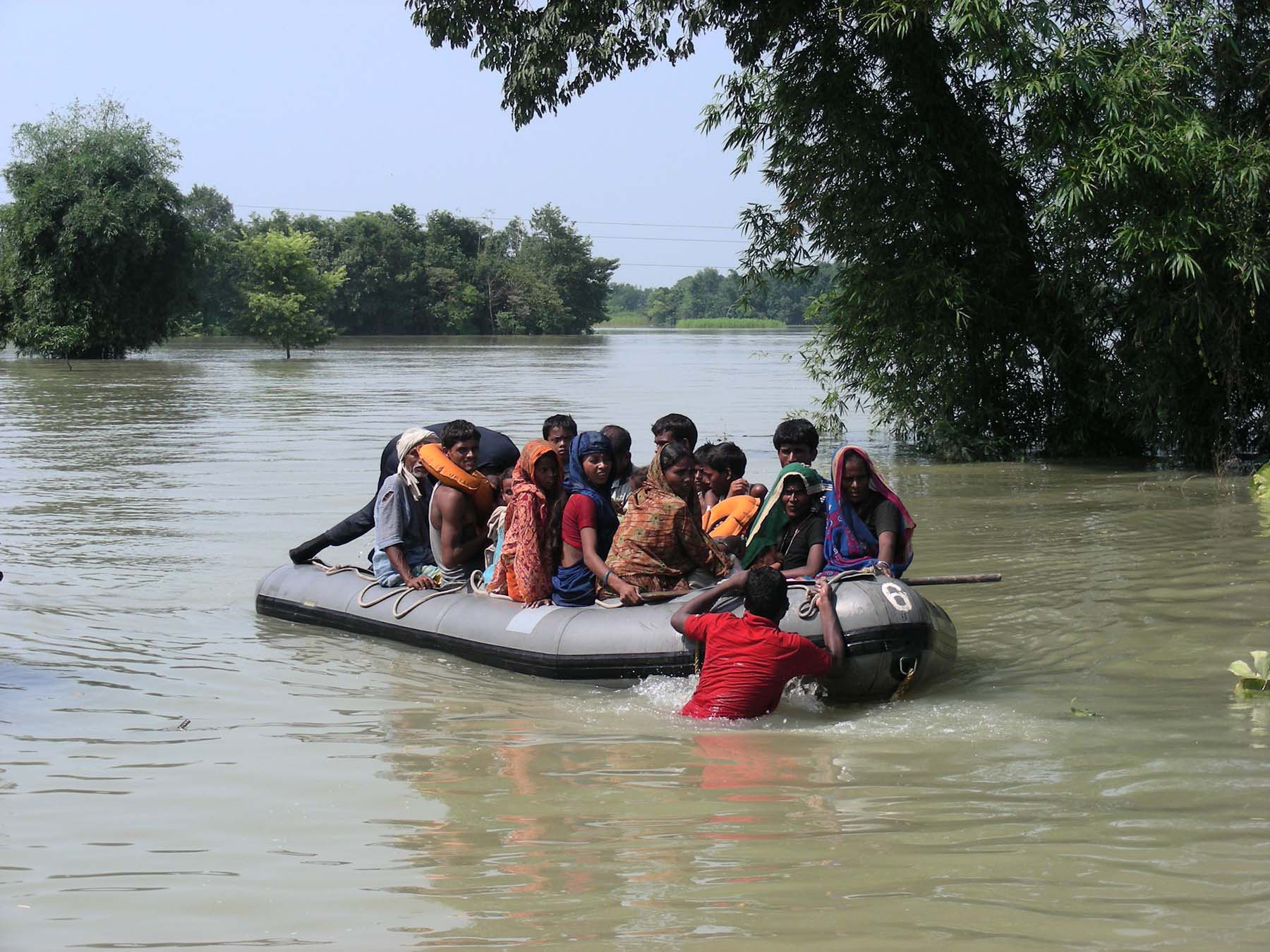
In 2015, Maharashtra was facing severe agricultural distress. Drought, crop losses, debt and farmer suicides were devastating communities. Patekar became increasingly involved in efforts to help farming families, and he joined forces with fellow Marathi actor Makarand Anaspure to establish Naam Foundation in September that year.
The foundation's work was not limited to raising awareness. It developed programmes aimed at providing immediate assistance to families and addressing some of the longer-term problems affecting rural communities.
Patekar was a well-known actor, but he used his visibility to draw attention to a crisis that was often discussed through statistics rather than individual lives.
Naam's published accounts describe assistance for families left behind by farmers who died by suicide. The foundation reports having supported 4,940 such families across Maharashtra. It also describes payments intended to provide immediate relief to widows and dependent children.
The foundation's accounts describe an initial assistance payment of ₹15,000, later increased to ₹25,000.
Naam's work also included assistance with housing and other community needs.
A report published by The Indian Express after Patekar's death revisited the foundation's work in Beed district. It described how support provided to Rajashri Pardeshi, including a sewing machine, helped her sustain her family. The report also discussed water-conservation work benefiting farmers in the region.
The most ambitious part of Naam Foundation's work has been water conservation.
Tanushree Dutta: The controversy that followed him for years
In September 2018, Tanushree Dutta's allegations against Patekar became one of the defining stories of India's #MeToo movement.
The allegations concerned an incident on the set of Horn 'Ok' Pleassss in 2008. Dutta said Patekar behaved inappropriately towards her during the filming of a song sequence. Patekar denied the allegations.

March 2008: The alleged incident
Dutta had been contracted to appear in an item song for Horn 'Ok' Pleassss. She alleged that Patekar, who was not supposed to be part of the song, touched her inappropriately under the pretext of teaching her dance steps.
She said that she objected, complained to people involved in the production and withdrew from the shoot.
She also alleged that intimate steps were introduced into the proposed choreography without her consent.
Dutta subsequently complained to the Cine and TV Artistes Association, or CINTAA. The incident therefore predates the public explosion of India's #MeToo movement by approximately a decade.
September–October 2018: The allegations return to the headlines
In 2018, when Global #MeToo movement was expanding rapidly, Dutta spoke about the incident in interviews, including with Zoom TV and India Today.
Patekar denied the allegations. He questioned how the alleged conduct could have occurred in front of a large crew and indicated that he would pursue legal options.
The eyewitness accounts
Journalist Janice Sequeira subsequently published an account of events she said she had witnessed while covering the shoot.
Her account described the atmosphere on set, Dutta's distress and the events surrounding her departure. It supported parts of Dutta's description of the day, although it did not independently establish every allegation of inappropriate touching.
An eyewitness account can corroborate certain parts of a person’s story without necessarily proving every detail. An old YouTube video also appears to support aspects of what Tanushree told the press.
June 2019: The police closure report
Mumbai Police filed a closure report stating that there was insufficient evidence to substantiate Dutta's allegations. The police said that none of the 13 witnesses whose statements were recorded had corroborated the alleged inappropriate touching.
Dutta disputed aspects of the investigation. Patekar continued to deny the allegation.
The closure report is an essential part of the record. So is the fact that Dutta had raised the matter years earlier and that a journalist subsequently supported parts of her account.
Why the case remains significant
The controversy exposed a problem that extends well beyond one actor and one actress: the difficulty of discussing alleged misconduct when the accused person is influential and the complainant's professional future may be at stake.
Dutta’s account deserves to be examined without ridicule or assumptions about her motives. Beyond the individuals involved, the case raises important questions about working conditions, accountability and the safety of women in the film industry. A fair and serious examination of such allegations could encourage more women to speak about their experiences and contribute to creating a more respectful, safe and accountable working environment for everyone in the industry.
If someone disagrees with Dutta, that’s fine but don’t make it an excuse to humiliate or abuse her. This is particularly important for women who have criticized or attacked Tanushree for speaking out against Nana Patekar. You may disagree with her approach or question aspects of her account, but calling her a whore, dismissing her as a publicity seeker or using other derogatory terms does nothing to advance the discussion. Instead, it shifts the focus away from the issues she raised and undermines the courage it takes to speak publicly about a deeply personal experience.
Patekar's influence extended beyond cinema and social work.
He maintained relationships with political figures across party lines, including Shiv Sena founder Bal Thackeray, NCP leader Sharad Pawar, and leaders associated with the BJP and Shiv Sena factions.
Such relationships gave him access and influence, but access should not be confused with direct control over political decisions.
The BJP approached Patekar about contesting the 2014 Lok Sabha election from Mumbai North Central against Congress leader Priya Dutt.
He declined.
When Nana Patekar died at the age of 75, tributes came from actors, filmmakers and political leaders.
A person can mourn an artist without endorsing every action attributed to him. A colleague can remember a kindness without claiming that the person was always easy to work with. A political leader can recognize a public contribution without settling every controversy.
Nana Patekar's life challenges the way we think about public figures.