Does public opinion and movie reviews influence our decision to watch a film? Absolutely. Especially if you are not someone who goes to the movies every other weekend.
For occasional moviegoers like us, going to the theatre is almost an occasion. You want to watch something that people are genuinely enjoying, talking about and recommending. Nobody wants to spend an evening and good money on a film that turns out to be a completely different experience from what its promotions promised.
We have been disappointed before. Big promotions, big stars, extraordinary promises and, eventually, a rather underwhelming theatre experience. Brahmastra was one such memory that was still fresh in our minds. So, when we decided to watch Ramayana, I must admit I walked into the theatre with considerable apprehension and, honestly, fairly low expectations.
There was already so much noise around the film. Ranbir Kapoor playing Lord Ram was questioned by many. There were debates about the casting of other characters, the interpretation of the story and, most importantly, the visual effects. The criticism started well before audiences had even seen the film. There was so much discussion around the VFX that one wondered whether the makers had got it right at all. Reports of changes being made following the feedback only added to the conversation.
What I found particularly interesting was how people had already formed an opinion about the film without watching it. The hype was enormous, but so was the negativity.
And then the film started.
Within the first two minutes, you realise that this is a very different kind of cinematic experience.
The scale, the grandeur and the way the story unfolds immediately draw you in. The film begins by taking us through the larger story of creation and the roles of the three gods (Brahma, Vishnu, Mahesh), setting the context through powerful visuals and voiceovers before gradually moving into the world of the Ramayana.
There is an unmistakable sense of scale to the storytelling. The film doesn't take too long to establish its world, and the pacing keeps you invested. Despite knowing the broad storyline, there are several portions that make you curious because you may not remember every detail of the epic.
One such aspect is the backstory of Ravana. We all know him as the antagonist, but how often do we explore the making of Ravana? He was not just a powerful king. He was an extraordinarily intelligent Brahmin, deeply knowledgeable in the Vedas, a great scholar and a man of immense capabilities. Yet, his ambition, ego and darker side eventually defined his destiny.
The way the film builds this character and explores his journey is particularly gripping. It reminds you that the story of Ramayana is not simply about good defeating evil. It is also about the choices, ambitions, strengths and weaknesses that shape individuals.
And then comes the much-discussed VFX.
After all the criticism, I was naturally watching the visuals quite closely. But honestly, I was pleasantly surprised. There were moments when the experience reminded me of watching Avatar. If audiences have embraced the visual worlds created by Hollywood's Avatar and Marvel franchises, I don't see why they wouldn't appreciate the visual ambition of this film.
The VFX is not merely about making everything look bigger or more spectacular. In several instances, it actually enhances the storytelling.
For example, the sequences involving cursed forests, the demons and Lord Ram's intervention bring an entirely different dimension to the narrative. The battle sequences are engaging, and there are moments when the action is so immersive that you almost feel you are part of the scene.
Some sequences genuinely give you goosebumps. You find yourself reacting physically to what is unfolding on screen. And that, to me, is what a good theatrical experience should do.
The emotional moments are equally important.
The scene where King Dasharatha is confronted with Kaikeyi's demands — that Ram should give up the kingdom in favour of her own son and spend 14 years in exile — is beautifully handled. It touches an emotional chord because it is not just about the loss of a kingdom. It is about a father's helplessness, a son's acceptance and the sacrifices that define the story.
And then there is Jatayu.
One of the most talked-about sequences in the film, and rightly so. The entire fight sequence, the way it has been conceptualised, choreographed and brought to life, is exceptional. There is so much detailing in the execution that you find yourself appreciating the effort that has gone into creating it. It is one of those sequences that deserves a second watch.
There had been considerable discussion about preserving the sanctity of the original Ramayana. Having watched the film, I feel the makers have largely respected the source material. There are creative liberties here and there, as one would expect when adapting an epic for cinema, but the central narrative and its spirit remain intact.
Coming to the performances — this is where the film really comes together.
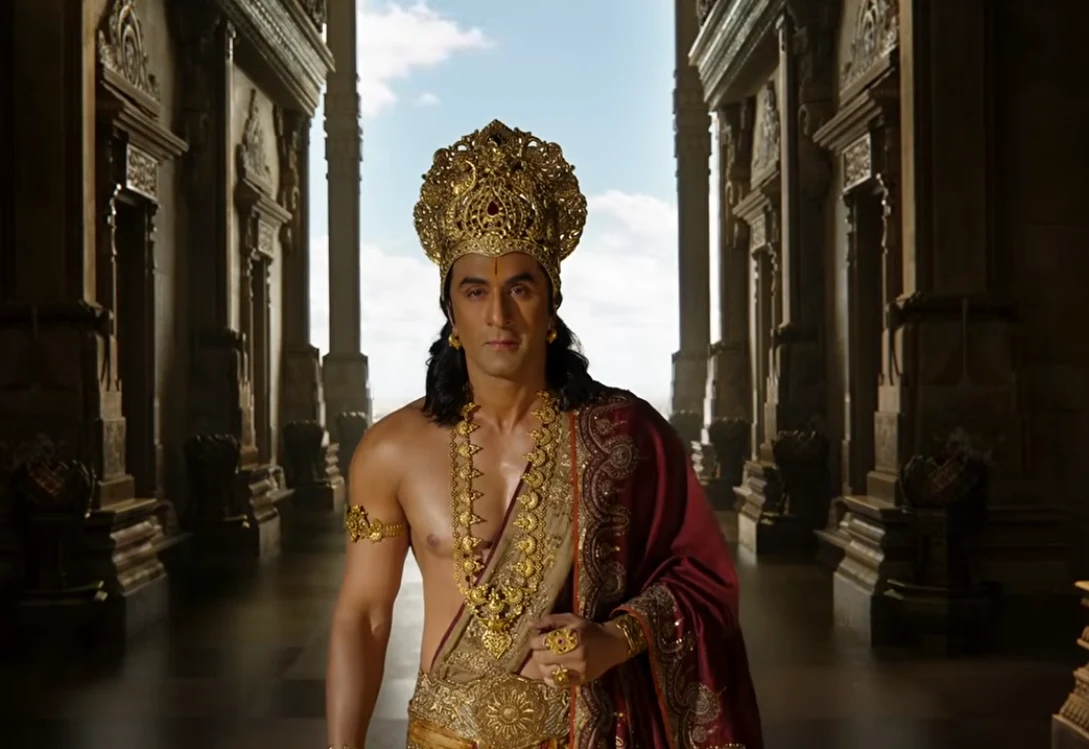
Ranbir Kapoor as Ram deserves special mention. His casting was perhaps one of the most debated aspects of the film, but he has more than justified the responsibility that comes with playing such an iconic character.
He brings restraint, calmness, sincerity and a certain grace to the role. There is no unnecessary dramatics in his portrayal. His Ram is composed, dignified and quietly powerful. It is a performance that requires an actor to hold back rather than constantly demonstrate his abilities, and Ranbir understands that beautifully.
Even though Ram's character does not have the same dramatic intensity or complexity as Ravana in several portions, Ranbir manages to leave a strong impression. He has once again demonstrated why he is among the finest actors of his generation.
I did, however, have slightly higher expectations from Sai Pallavi as Sita.
She has certainly put in her best, and there are moments when she looks the part. But I felt some of her expressions could have conveyed greater emotional depth, particularly during the Jatayu sequence. Even in the Swayamvar scene, I expected a little more elegance and visual presence befitting Sita. She does a reasonable job, but I was left wanting a little more from her portrayal.
Yash, on the other hand, is a star to watch out for.
Every time he appears on screen, he commands attention. His portrayal of Ravana has tremendous presence. Whether it is the Shiv Tandav, the scenes depicting the making of Ravana or his powerful screen presence, he brings an intensity that is difficult to ignore.
He makes Ravana formidable, ambitious and larger than life. And that is important. For the eventual victory of good to have its full impact, the antagonist has to be equally powerful. Yash certainly brings that strength to the character.
Ravi as Lakshman is another casting that works beautifully. He has nailed the role. There is a certain conviction in his performance that makes you believe he is Lakshman — protective, fiercely loyal and always standing by his elder brother. It genuinely feels as though he has internalised the relationship rather than merely acted it out.
Rakul as Shurpanakha, Vivek as Vidyutji and the other supporting characters have also played their parts well, adding to the overall experience.
There has been quite a bit of criticism around the music, but I personally enjoyed the songs in the album. I do, however, feel that the background score could have been stronger in certain scenes.
For instance, the sequence where Lakshman cuts off Shurpanakha's nose had the potential to be much more dramatic. A stronger background score could have elevated the intensity of that moment. There are a few such instances where the music could have done more to complement the visuals and the emotions on screen.
It is a small observation, but when a film is made on such a grand scale, every element contributes to the final experience.
A Ramayana for a new generation
The Ramayana has been narrated, retold and interpreted by generations of storytellers. It is a story most Indians grow up hearing, in different forms and through different mediums.
But bringing an epic of this scale to life on the big screen, with this level of visual ambition, is an entirely different challenge.
What I particularly appreciate is that the film makes the story accessible to a generation that may not necessarily have grown up reading or listening to the Ramayana in detail. Our children should know these stories, understand the characters and appreciate the values and dilemmas they represent. Cinema can play a powerful role in making that connection.
This is where Namit Malhotra's vision deserves recognition. Bringing a project of this magnitude to life requires not just resources but extraordinary conviction, patience and a belief in what one wants to create. There is something particularly meaningful about seeing an Indian epic being presented with such ambition and on a scale that can be appreciated by audiences across the world.
And a special mention to Nitesh Tiwari. Handling a story of this magnitude, with so many characters, expectations and technical complexities, is no small task. It is easy to get lost in the scale and spectacle of such a production, but he manages to keep the storytelling at the centre. That is perhaps his biggest achievement.
My final take
I went into the theatre with low expectations, influenced by all the criticism and debate surrounding the film. I came out genuinely impressed.
Is it perfect? No. There are areas where the background score could have been better, and I would have liked a little more from certain performances. But do these shortcomings take away from the overall experience? Not really.
What stands out is the ambition, the scale, the storytelling, the performances and the sheer effort that has gone into bringing one of India's greatest epics to the big screen.
I genuinely believe Ramayana has set a new benchmark for the scale and ambition of Indian filmmaking. It also opens up possibilities for how our own stories, history and epics can be presented to the world.
Namit Malhotra and Nitesh Tiwari have taken on an enormous responsibility, and the result is a film that deserves appreciation for its vision and execution.
Don't let the noise around the film decide for you. Go watch it and form your own opinion.
And if you are someone who watches a movie in the theatre only once or twice a year, I would certainly put this one on your list. Some films are simply better experienced on the big screen. This is one of them! I’m definitely going for a second time! How about you?